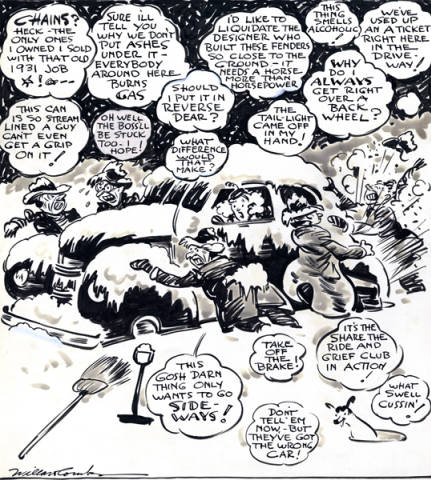
As I write this the Northeast is battening down for a weekend of blizzard. I am old enough to remember the days before global warming when this was a common occurrence. I would still have to go to school in below zero weather (where we would sit in our coats) and trudge back through the snow to get home.
There is another storm, the crisis of government workers – working or not, trapped by not being paid, yet not really free to ‘move on’, as America plays politics. I have lived through a government shutdown as a worker – I did not face a long shutdown, but however long – the uncertainty takes a toll. It is not a holiday. I have been also been impacted directly by this shut down as the internship I was supposed to begin with the Smithsonian hangs in limbo land. I am fortunate; it is not my bread and butter. But it puts me into the “unease,” will I complete my certificate this summer as planned?
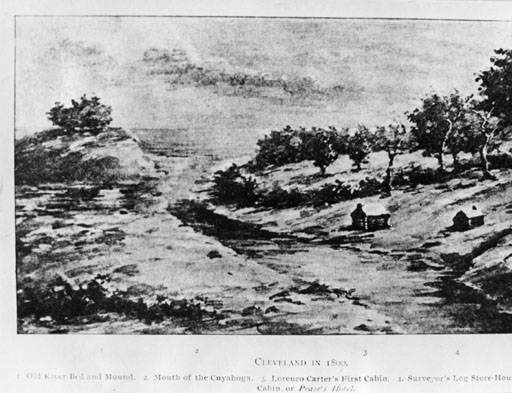
Storms of uncertainty can be powerful motivators. Cleveland women throughout the generations have not been idle when faced with questions they could not answer and problems they could not solve. They have taken action to solve them. In the earliest days, survival was an issue. Due to the nature of the crooked (meaning of the Indian name) Cuyahoga River, Clevelanders faced waves of malaria as well as other epidemics during its settlement period in the early 1800’s. Also from the beginning Cleveland women relied upon each other. Talitha Stiles one of the first settlers came to the Western Reserve with her husband and the Moses Cleveland Survey party in 1796. Talitha gave birth to the first ‘Cleveland child’ the following year, reportedly attended by Indian Women.[1]
The history of women and health care in Cleveland has mostly been unrecognized, because Western tradition and social practice has emphasized “firsts”, otherwise predicated as Great Men and Great Deeds. While men were “conquering the West”, women accompanied them, cooked for them, patched their clothes and their wounds, birthed the children and mostly received no recognition. No one ever recorded, ‘Talitha Stiles was the first woman to cook beans and muffins in Cleveland’. But, she was the first woman to birth a child in this Western wilderness, Charles Phelps Stiles.[2] I wonder if it would have been recorded had he been a she?
The projected internship: Women and Health Care in Cleveland: Utilizing the Digital Collections to Expand Community Connections and Collaboration focuses on network visualization & mapping of the changing organizations in women’s health care in Cleveland, OH during the 1960’s & 70’s. Women and Health Care in Cleveland is an ongoing research project that explores the impact of relationships in the development of our regional health care infrastructure. This Digital Public Humanities internship will focus on the intersection of changing Public Health policy, technology, and social cultures on the community and health care institutions. The components will feature the creation of a digital catalog of pertinent artifacts and resources as well as interpretation and visualizations of the collections, connections and impact of these changes.
[1] Scharf, Lois. :Women”, Encyclopedia of Cleveland History, 1988 case.edu/ech/articles/w/women (accessed 1/21/19)
[2] “Stiles, Job Phelps”, Ibid.
