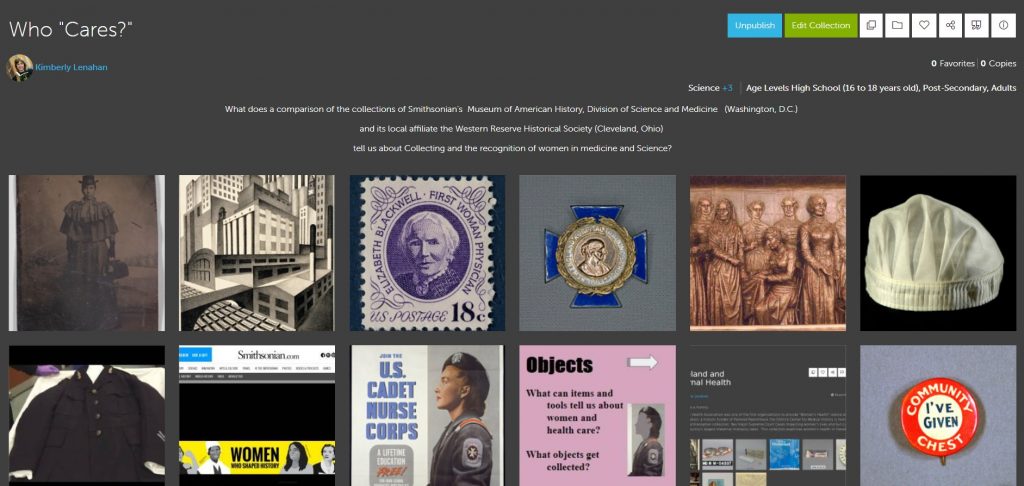
My internship was to create a Smithsonian Learning Lab exhibit that forged a bridge between the Smithsonian National Museum of American History: Medicine and Science CollectionsWashington, D.C., and those of the Western Reserve Historical Society, Cleveland, Ohio.
Proud of the work accomplished: as it broke new ground in highlighting women’s achievements in the area of medicine and science, that it has provided evidence for how women are seldom recognized or their artifacts collected; that it encourages attention to be drawn to women’s lives and stories; that a novel way of promoting this history has been developed on an innovative platform that will encourage use of the collections of NMAH Medicine & Science & the Western Reserve Historical Society.
Comforted by recognizing historic limits of medicine and science, which councils’ patience when I am caring for family members, or in the face my own health challenges. I am more empathetic with the striving of myself and others to achieve recognition. I commiserate with and seek to encourage those who are quiet or who have been overlooked, viewed as ordinary as their heroism may be greater than those whom we applaud.
More courageous having attempted something new, recognized it was more difficult than anticipated and still persevered. I am less fearful of looking foolish, breaking something, or violating rules. I am grateful for the space and opportunity to explore, collaborate with experts, rethink the use of standard practices, technological tools, and the limits of location, resources, and connections.
Wiser for having viewed my understanding of women, healthcare, place, and significance from an entirely different perspective. More thoughtful for having observed and experienced ‘teaching and learning’ in a different environment.
Committed to restoring what has been hidden, to being more intentional in valuing the students, the colleagues, and the people I interact with daily; to collecting their stories and their heritage and thereby the indomitable power of the human spirit.
What
insights do you have about working in digital public humanities as a result of
this experience?
The
first thing I have recognized about Digital Public Humanities is the ignorance
and confusion about it among the public and in academia.
When
I introduce myself or attempt to explain my project, colleagues and
acquaintances have difficulty both with the concept of “Humanities” as a
multi-disciplinary subject and as an academic field of research. I remind them of longer standing
multi-disciplinary areas: American Studies, Ethnic Studies, Gender Studies,
Labor Studies, etc. Explain that
“Studies” allows the individual the opportunity to draw from many disciplinary
perspectives: History, Language, Literature, Psychology, Sociology, Religion,
in order to form a fuller interpretation and understanding of a topic or
society. Then comes the inevitable
follow up question, “What makes it “digital”?
Visual interpretation, academic interaction across media, crowd
interaction and using new tools based to
access massive data bases (Big Data, GIS and Public Records) allow us to
aggregate and reconstruct our interpretations of human activity and expression.
Another
perception is that a ‘discipline’ or ‘area of study’ it is needed, but the
“Humanities” aspect, even more importantly the “History” aspect needs to be
affirmed as integral to the field.
Academics
seize on the “new tools” and think the field is strictly about learning how to
use or create programs. The idea of the
impact of tools on interpretation is not “new” in American History, Charles
& Mary Beard had to defend their “new” methods. Socially, we have adopted computers as aids
to searching and collecting, but just as we have discovered ‘scientific
medicine’ has biases and unintended consequences; we are just in the infancy of
discovering how computing will shape and inform our culture.
“Professionalization” in the field is running ahead of its articulation
of itself. I attended a digital
humanities conference this past summer (which I will not publicly defame). It claimed design to facilitate the merging
of technical skills and disciplines; but sessions skewed technical, discipline
based or ‘sponsored’ by organizations with an agenda. Cross disciplinary dialogue and integration
was limited. I have also noticed that
already a “boiler plate” has been adopted by Human Resource Professionals, who
have been charged with creating job descriptions for this new unfamiliar field. In the short term (3 years) I have been studying
the field, already an extraordinary number of Digital Humanities job openings
are requiring Library Science degrees.
Library Science certainly aligns well, but for many projects, the
analysis and interpretation of the humanities based disciplines is critical to
meeting the goals of creativity, human insight and the creation of new
knowledge.
Like
any other Humanities discipline, research requires time and money.
Knowledge does not come cheap.
Research is a journey in detection.
Uncovering or following the threads of an idea require time-consuming
investigation. In Digital Humanities, a
portion of the cost is in new tools: creating, gaining experience with or
licenses. Presentation requires
preparation time and resources. As we
move from text-based to visual culture, the cost of digitizing must be
incorporated. Access to text has become
cheaper, faster, but compilation, resolution, transference of images, while
less cumbersome is still evolving.
Storage is still an issue.
Finally,
‘It Takes a Village!”
Historians have always relied on communities; archivists & librarians that lead us to materials, experts that share insight or stories pertaining to streams in our topics and other artists, poets and scholars. Digital Public Humanities requires a broader inclusion of technical skills, technicians and new emphasis on artistic and commercial skills.
Cleveland Foodbank
www.Clevelandmemory.org
2. What new questions or ideas do you have as a result of this experience?
Can
Historians continue to capture and
make ‘human experience over time’ relevant?
As the digital age has overtaken us, a culture of “immediacy” has also
emerged. Students and ‘the public’ want
information that is immediately relevant, aesthetically designed and easy to digest. “Pondering the Past” is not in fashion. ‘Looking back’ to search for answers is
devalued in the face of creating new solutions, methods and future goals. Even the short 400 years of American
Experience is being condensed or eliminated in our schools in favor of teaching
more “applicable” skills. I came to
Digital Public Humanities in my search to make my discipline; that emphasizes reflection
on the past, interpreting the deeper meanings of human experience and tracking
historic patterns and forces to foster richer and strategic decision making,
more relevant and accessible. I am still
asking, “How can I help people recognize the value of their past?”
Systems are the way we track and keep information. However just like people, institutions conceive and use information differently! Learning them and discovering how they connect can take time.
First woman to earn a Ph.D. in Computer Science
There are large gaps in our awareness of the role and actions of women. A ‘gendered assumption’ has existed in Western Civilization since the beginning of it; that women: were inferior, not to be trusted and powerless (Mary Beard explains this phenomena brilliantly). Since women’s thoughts and actions were not considered significant, they were neither acclaimed or recorded. As a result women’s role in history has been overlooked and their contributions undervalued. Re-tracing this “role” is important to really understanding our current society and civilization.
I am on a journey to connect and understand the ideas and actions of women over time. How can we understand how women shaped the system of health care in the United States? They have obviously used it! Less obvious is how they have influenced it.
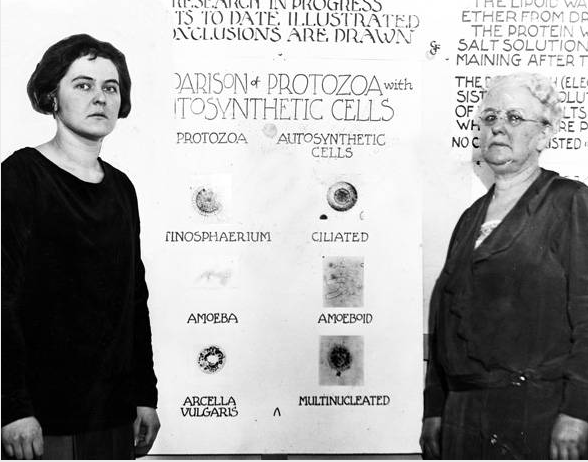
Dr. Amy Farley Rowland & Dr. Maria Telkes Discovery of autosynthetic cells with Dr. George Crile Cleveland Clinic Picture taken 12-31-1930
Working in multiple archives has proved somewhat challenging. So I have decided to pursue this digital project in a new way — contextually! Starting from searching the archives directly, for connections linking specific physical evidence between Cleveland’s Western Reserve Historical Society and the Smithsonian Division of Science and Medicine, has not yielded any results. The next iteration of this project is going to begin with specific Cleveland women who were involved in changes in medicine and health care.
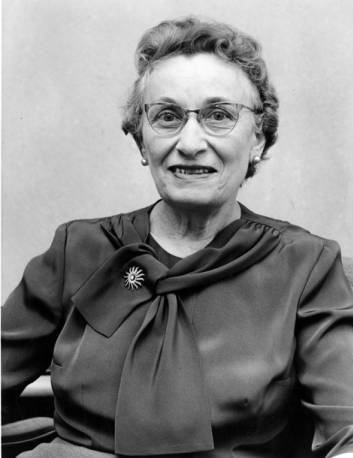
Dr. Sarah Marcus Courtesy of The Cleveland Press Collection, Michael Schwartz Library, Cleveland State University
Women like: Rowland & Telkes, Dr. Sarah Marcus and Lulu Greves and the hundreds of nurses who cared for Clevelanders.
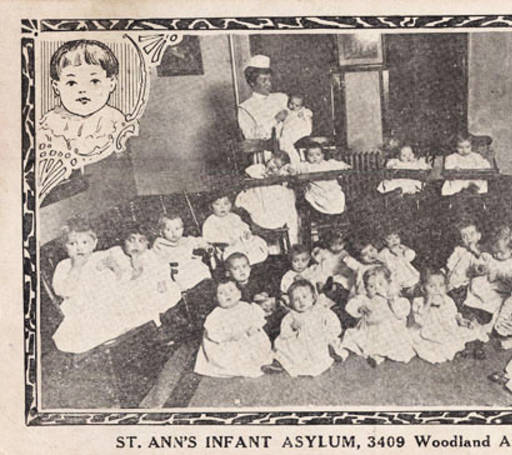
St. Ann’s Infant Asylum c 1910 Courtesy of The Cleveland Press Collection, Michael Schwartz Library, Cleveland State University
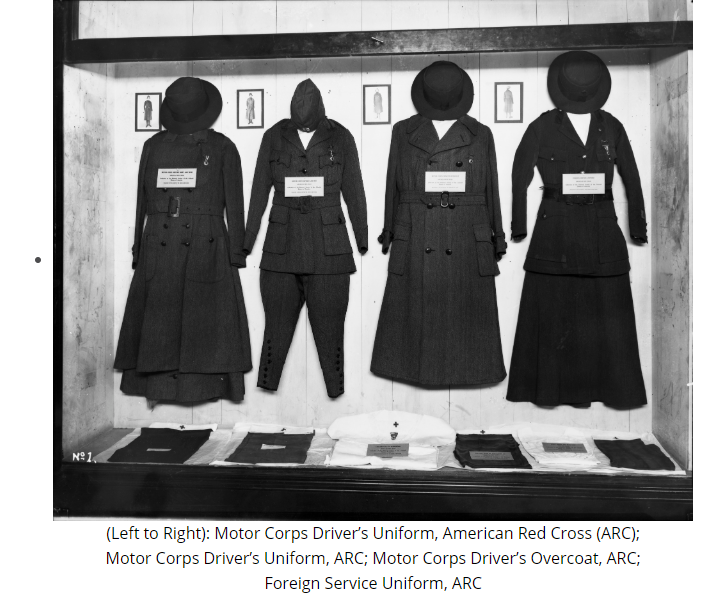
I have not located Drs Rowland or Agatha Hodginsm Nurse Anesthetist who worked with the Lakeside Unit in WWI (see Andre’ Van Zundert’s page) in the Smithsonian Database. It is possible to learn more about them from artifacts and exhibits such as Women in World War I . They would have worn uniforms similar to these:
Women in WWI: Women’s Uniforms National Museum of American History
It is a start to understanding these women and weaving the story of their past.
What skills or knowledge from your coursework are you using in your internship? Have you noticed a difference between theory and practice? Why or Why not? This is a challenging question for me, because I have been attempting to merge history and Digital Public Humanities (DPH) and it is difficult for me to now isolate them. ‘What are the skills of DPH and how does the theory and practice differ from traditional history’ and is what the essence of my internship’ and another effort to merge the two (history and digital humanities).
During the process of arranging for this internship and coinciding
with it; I have had some planned, some unanticipated, professional and personal
opportunities providing DPH engagement experience. These ventures have provided their own
insights into the theory and practice. As
I have made a concerted effort to immerse myself in all things digital
humanities over the past 2 years, the experiences tend to wind together in my
brain.
In terms of theory, my natural bent is to the work of Sam
Wineburg who discusses the nature of historical thinking and Digital Humanities
processes reflecting on the intellectual differences between the two.[1]
He applies historical thinking methodology to the data gathered through digital
means, in other words, ‘digital humanities’ is just a new historical
methodology. That is what I thought when
I decided I wanted to learn what ‘digital humanities’ was all about. However, every historian is taught the significance
of methodology and how the body of research impact interpretation. The use of the term “corpus” has transformed
the meaning of historical research to include digital textual and linguistic
analysis rather than the socio-cultural contextual analysis traditionally
practiced. Digital historians seek to
incorporate the digital into our research, which changes where we search for sources
and eventually influence our interpretation.
In my internship, I am seeking to create a new corpus from established collections and then interpret and present the findings using digital strategies. To date, I have found helpful in this process, theory that is ‘methods’ rich, such as the work of Sheila Brennan and T. Mills Kelly. Although I am not creating a crowd-sourcing project; their framing has been helpful. I have applied their “lessons” in content collection, technical issues, attracting visitors & building trust with potential contributors and most important adding 25% (50% if you are a newbie like me) to TIME Estimates. Their idea that “low barrier entry is critical”I found very applicable when recruiting partners for this internship. I promoted maximum benefit, minimal work and management to my supervising institutions as the “low barrier entry”. Institutional collections, even when you think you are familiar with them, have their own idiosyncrasies and the assistance of ‘the insider’ is essential.[2] The literature of digital methods AND historical thinking is helping as I process the form of the Smithsonian Learning Lab collection I am creating.[3] However, the experts make it appear so easy. The challenges of research, the interference of daily obstacles and filling in the gaps of technical knowledge sometimes make this adventure feel more tedious then inspiring. But then I remember: I am creating new knowledge, in a new way……Making History!
[1] Wineburg,
Sam. “Why Historical Thinking is Not About History.” History News 71, no. 2 Spring. 2016.
[2] Brennan,
Sheila A., and T. Mills Kelly. “Why Collecting History Online is Web
1.5” Roy Rosenzweig Center for History and New Media. 2009.
[3]
Examples include: Kelly, T. Mills. “The History Curriculum in 2023.”
edwired (blog). January 2013. Schrum, K.
(2012). “A tale of two goldfish bowls . . . Or what’s right with digital
storytelling.” In D. Cohen & T. Scheinfeldt (Eds.) Hacking the
academy: A book crowdsourced in one week. Ann Arbor, MI, University of Michigan
Press. Calder, Lendol. “Uncoverage:
Toward a Signature Pedagogy for the History Survey”. Journal of American History. P. 1358-1370. March 2006.
History, Women & Health Care in Cleveland and Digital Public Humanities