While my long term project in stalled in administrative tedium, one project winds down and others wind up; I had the opportunity to participate in a few engagement activities that sparked reflection. A public conversation between Carmen Twillie Ambar and Robyn Minter Smyers, moderated by Marianne Crosley that I expected to be more skill focused, was empowering. The event I expected to be more empowering, the Cleveland International Women’s Day march, was less so.

The conversation held in the protected arena of the Metro Campus Center, promoted as discussing “the future of leadership”, focused on affirmation of women’s ability to succeed as women in the public space. It provided a moment of context, recognition of hard earned and won success and commitment to “do more”. These women’s candor, both agreed that work life balance is a struggle and competing demands require prioritizations, actually made aspirational hopes seem more achievable. Meanwhile, I felt the March reflected a larger and more disturbing trend, the difficulty of public discourse in the modern environment.
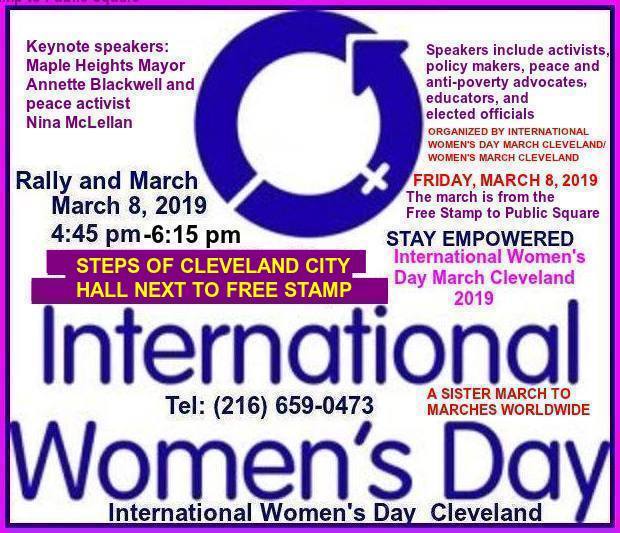
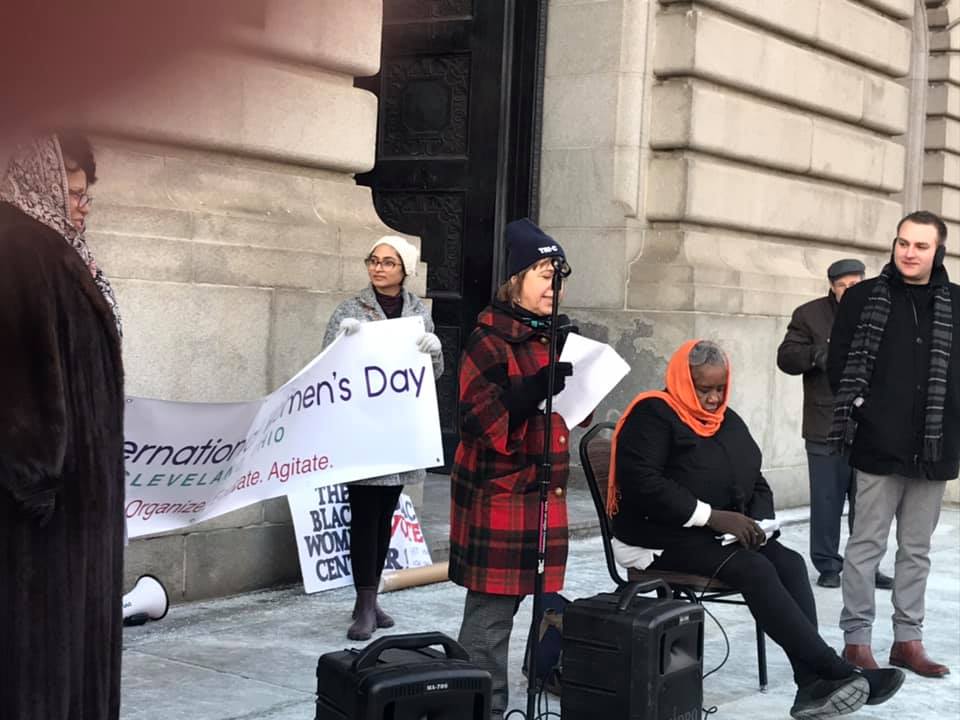
Grassroots movements were powerful in the 1960’s and 70’s, because they seemed to be built from collaborating efforts among organizations rather than competing efforts to “have my say” in front of the press. In my Pollyanna optimism, the public microphone should be an opportunity to inform and build consensus. (https://www.facebook.com/clevelandcom/videos/2208899279372104/)
This march, felt like a jumble of competing objectives that were displayed in front of a small audience and a visible opposition. It was not the presence of the opposition that surprised me; it was their comfort in expressing extremist views. (To the person holding the sign calling for the extermination of all Black People… exactly what qualifies as a black person? Since all of us have African DNA, it appears to me you are calling for the extinction of the Human Race. Perhaps a little education would help you see the ramifications of your thinking, I digress.)
My role was to reflect on the topic of ‘Women and Education’. It was my pleasure to provide a quick 3 minute reflection on equity, visibility and a reminder of women’s leagacy of activism and promote consciousness of what needs to be done in the future.
A fear of the
tyranny of the minority was expressed in the Federalist Papers, but the U.S. Constitution was constructed by flawed,
prejudiced, patriarchal white males; they also had the Pollyanna faith that “In the extended republic of the United
States, and among the great variety of interests, parties and sects which it
embraces, a coalition of a majority of the whole society could seldom take
place on any other principles than those of justice and the general good.”[1] Theoretically, the public space provides all Americans the opportunity to present
their case in the court of public opinion.
Women and other minorities in the past (including extremists), have used
their soap boxes to express their beliefs, claim their rights and try to garner
public support to shift a minority opinion to a majority stance. As public
spaces have shifted to commodified, digital, international networks, our local
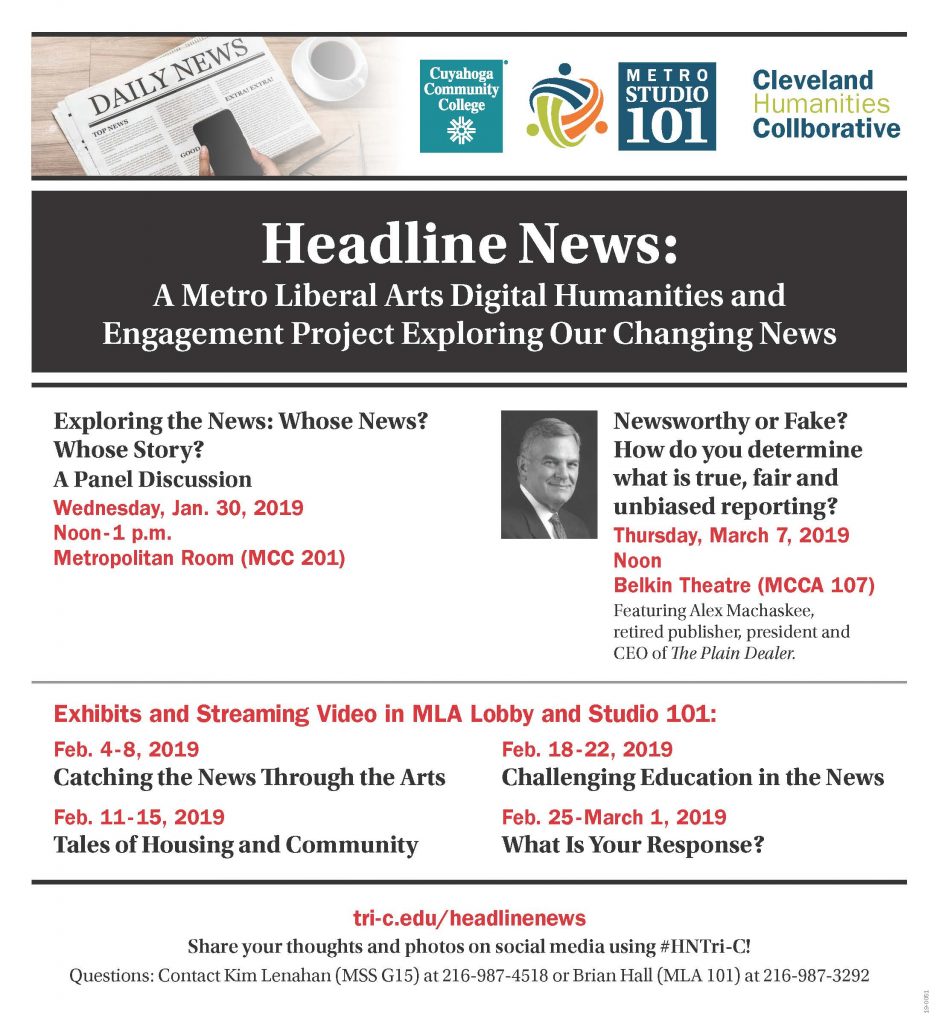
public discourse is suffering. Alex
Machaskee, former editor and publisher of the Plain Dealer expressed his concern over the power of “click bait”
in driving decisions and the formation of content during the final event of Headline News project. He advocated investigating the sources and
reading with a critical eye, but emanated an aura of confidence regarding the
future of journalism.
Where do these deep thoughts and debates leave Cleveland women? In some ways, the same place we have always been– confronting the problems we face with the tools we have. However, highly educated and president of historic Oberlin College, Carmen Twillie Ambar expressed she is only 2 generations removed from picking cotton. Robyn Minter Smyers grew up in Cleveland and sits as one of 9 members of the International Board of Thompson, Hine & Fleury. Mothers with young babies stood in 24 degree sunshine on the steps of Cleveland City Hall to support the idea of International Women’s Rights. ‘As long as hope endures’, I agree with Susan B. “Failure is Impossible”!
[1] Franck, Matthew. “Religious Freedom” http://rootsofliberty.org/religious-freedom-in-the-federalist/ accessed 3/9/2019.
