Category Archives: Hist 689

Sixth Piece of the Puzzle – Technology

Technology is a key component of Digital Learning.  Does that seem like a patently obvious statement?  Yes, but this simple statement has deep ramifications.  For some individuals technology comes easy.  Often these are the individuals who adopt the latest and greatest, are excited about changes and shift between screens, software, hardware and mobile apps like expert skiers navigating moguls.  Assumptions, there is a generational divide in the adoption of technology and soon we will “age out” of our technological hurdle, are misplaced.  In my Community college classes, I find the digital hurdles include: access, poverty, class, mental processing and perspectives.  I have also found that “tech users” are often, not the best instructors, because they do not understand why or how a hurdle exists.

As I have watched the expanding usage of technology, I realized that there was something I was just “not “getting”.  For me the “skills” were not transferable.  Every change in platform, software, hardware, & upgrade became a hurdle.  Another technology I had to learn, which I knew would last only until the next upgrade.  I resented the time spent learning the technology to ‘display history’ as opposed to “doing history”.  Techies argued, “there are great tools that “do everything for you” – just drop in your data!”  But if I “dropped my data”, do I really understand the results?  As we have learned in this certificate program, decisions are made at every step and they shape the outcome of the digital processing.  Manoff

Constructing the “Finding Women in Cleveland” project has been an adventure in digital teaching and learning.  How hard could it be to ‘transform the tour…to place images on a platform and ‘plug in’ images, video and audio?  I was thinking analogically.  I have been challenged to think digitally, to weave technology, historical ideas, urban artifacts and educational goals into the project.  Digital thinking transforms the product; the goal of education transforms the technology, the technology is transformed by the nature of the materials and artifacts, the use of the digital platform transforms the engagement and the process of integration transforms the educational goals.

Just as learning systems were developed to prepare workforces for the industrial age, learning systems must be  transformed for the digital age.  Large machines and large organizations were built to last.  Authorities told us what was important, and keeping “the line” was important.  But if the goal is creativity, flexibility and responsiveness to diverse populations and demands…teaching and learning must be adapted to promote these skills, even in understanding and presenting our past.

Thus, digital learning is incremental, flexible and engaged: “teach me what you are doing, so I can learn by doing, so I can not only participate but evolve.”  The human skill of teaching and learning becomes a collaborative endeavor.  Humanity and individuality is recognized and really, isn’t the goal of education to get people to live together peacefully and prosperously?  We can be lured by the Apple (pun intended); we can focus on the wrong things, mindfulness of what is gained and lost from our traditions and understanding of the past is critical.  We cannot halt the future, nor would we want to, but engagement can be the bridge between generations and the glue that holds the puzzle together.

Notes:

Manoff,​ ​Marlene.​ ​​”The​ ​Materiality​ ​of​ ​Digital​ ​Collections:​ ​Theoretical​ ​and​ ​Historical Perspectives.”​​ ​​Portal:​ Libraries and the Academy ​ ​6,​ ​no.​ ​3​ ​(07,​ ​2006):​ ​311-25.

Parks and Presenting the Past

I feel the two questions asked:

  • What are the challenges we face as history educators with presenting the past in the digital world?
  • How have digital tools made it easier to teach about and help our audience(s) engage with the past?

have been answered in previous assignments.  But as I read, Coslett and Chalana I was drawn into other questions which have been touched on, but seem to justify more conscious thought.

  • How are digital tools and methods changing our “public history identity”?
  • What potential forms of history can be developed utilizing digital methods?
  • How can historians master these forms as they arise?
  • What is the appropriate role of history in shaping a changing national culture?

I feel even Coslett and Chalana’s recent review of the challenges faced by the National Park Service in recognizing and responding to demographic tides and trying to create more inclusive “stories”, was dated and missing the point.  The fundamental decline in visitors is not just about the presentation of “stories” told, it is about a culture that no longer sees the outdoors as a space to relax and escape the pressures of life.  It is about a culture that no longer seeks to “memorialize”, preserve traditions or educate by viewing monuments or homes of the past.  How is our “digital world” removing us from the physical one and what does that mean?

This reflection does not mean in any way to disparage the efforts of the National Parks.  I agree with the articles’ premise that our “stories” need to reflect the complexity and diversity of the true populations and our history, but we need to do more than that.  The fundamental message of this course has been engagement – learning by doing.  Most of our traditions, institutions and structures were created in the last century to respond to the needs of an industrial society.  We are just moving into the digital economy, industry and culture and as historians we have to be more diligent in recognizing the cultural shifts that are occurring through the transition.  Sitting was a luxury when people stood at machines all day.  Families went to the parks for healthy “fresh air & sunlight” apart from the dark factories and smog.  History was authoritarian and monumental.  In a culture that sits at screens all day, yet views gaming as preferred entertainment, individual tweets or self-publication as significant public information and sunlight as threatening (are you armed with lotion and bug spray?) – we are going to have adapt our interpretations and methods.

How can San Juan Island investigate its prehistoric past and can modern crowd-sourcing methods help?  Could digital mapping help the Cayuse regain and expand its understanding of the past?  What were the epidemic diseases of the Oregon Trail and could their causes, remedies, impacts and genetics be identified, interpreted and used to forge bonds between the many peoples of the West?  Is there such a thing as a “future past” that can be created and how much must we rely on the ‘Ancients’ to create it? (Grethlein)  Or can we draw the public into creating digital histories and identities?  Can we make fiction  more engaging then nonfiction and mythology?  Perhaps the next marketing campaign for the National Parks can be “Help us Create a New National Identity!”

Note:

Coslett, Daniel E., and Manish Chalana. “National Parks for New Audiences. Diversifying Interpretation for Enhanced Contemporary Relevance.” The Public Historian 38, no. 4: 101-128. November 2016.

Grethlein, Jonas. “Future Past”: Time and Teleology in (Ancient) Historiography” in History & Theory v. 53 n. 3, October 2014. https://onlinelibrary.wiley.com/doi/abs/10.1111/hith.10715 accessed 7/11/2018.

Historical Thinking

Sam Wineburg in “Why Historical Thinking is Not About History” states, “The Internet has obliterated authority”. p.14  I  agree  the internet has contributed  to the  decline of authority and more significantly an “anti-intellectualism”.  When one was faced with ‘reading books’ to gain knowledge, the individual chose the books and their use of time carefully.  There was also a basic agreement that a common core (pardon the pun) of cultural literacy and history needed to be acquired.  The ‘felt need’ to remember public names, facts and dates is completely erased.  “Ask Siri” or “Google it” never seems to raise the question of who wrote the script for Siri or the entry we read.  Even more important, the question of “why did this entry appear first” is not usually asked either.

While “facts” might always have been subject to ‘interpretation’, there were sources which were given authority or credence.  Now a multitude of alternative explanations can be raised instantaneously and we exist in a political climate that confuses philosophy with character.  What “we believe or want” always receives some kind of validation from the web; whereas critical thinking takes time, investigation and may not provide simple gratifying answers.  ‘Founding Myths’ where “the Good Guy always wins”, may validate a position or make a group feel powerful or just; but often distort the reasons the ‘Good Guy’ was in conflict.  To “counter” these trends; we have to move away from the fight!  Rather than utilizing ‘polar debate’ or ‘authoritarian’ traditions, civic culture requires the development of “the questioning mind”.   As Sam Wineburg indicates, this is the skill developed by ‘Historical thinking’.

A huge shift for historians is to take our ‘smoke and mirrors’ methodology and display it before and more prominently than our interpretations.  ‘Scientific Method’ has been able (to this point) to effectively distill the core elements of a process or element, which because of the ‘repeatable’ process brought its own authority.  The discourses of “the Arts” have relied on authorities rather than teaching their processes, because the volumes of material, effort and physical realities of access to sources limited their use.  Digital tools makes access possible.  It is possible to scale projects to promote a more accurate understanding of how accurate interpretations can be made.  Utilization of historical methods in a few steps can debunk the “Feel Good” rhetoric that obscures the complex history of problems we face.

Wineburg’s “Digital Toolbox” is history’s ‘scientific method’.  The worldwide web brings images and resources to the palm of our hands.  Asking a few questions can help us distill the purposes of the messages we are examining.  Sharing questions can defuse political vehemence and bring the public into the analytical conversation.  We may all learn there that most of us are “good people”.

Wineburg, Sam. “Why Historical Thinking is Not About History.” History News 71, no. 2 Spring. 2016.

Thinking about Thinking & Learning

This is not news but…a very interesting and extremely useful component of on-line learning is the flexibility to watch & learn on your own schedule.  Also, to stop a lecture or interview to listen again and/or to reflect on what is being said.

Internet Book Archive/ Flicker

Erin Bush’s advice to rethink the syllabus caused me to ‘rethink’ the way I am thinking about Learning Objectives.  I have been considering learning objectives as a checklist rather than a scaffold. My process had been to designing a course and then return to the objectives to assure they were all being met.   However, thinking about objectives as “engagements” and then layering them into a course in a novel idea for me.   Her reflections on considering what resources she would have to create, also stimulated my thinking regarding how I am approaching resources.  These considerations will be impacting how I design my fall courses.

The challenges expressed by Wieringa and Sharp, were similar to the issues that stimulated my interest in the George Mason Digital Public Humanities course.  Their goal of practice, which mirrors my own concern with developing historical writing, helped me recognize that shorter length and greater diversity (actually lowering what was demanded in each assignment) might help meet the ultimate goal in a more realistic fashion.

Examples and interpretive styles demonstrated in the Hardy, Swain and Pethel & Gris interviews have expanded my awareness of tools.  Specific application and adaptation of: Smithsonian resources, guides that others have created and utilization of the wider array of primary and secondary sources online; will need development.  The stimulation renews my enthusiasm and energy for thinking more carefully about the essence of teaching and learning.

I appreciated Andris Straumanis’ reflection, not so much for new ideas, but significant disciplinary insights.  His comment on helping students understand the role of poetry in 19th Century journalism reminds us of teaching the details of historical context.  His recognition of the significance of working with other students in this course reminds us of the importance of collaboration, not only with fellow students, but with colleagues inside and outside of our disciplines.  As internet resources become vaster and we collaborate on-line with other experts in our own areas, it is important to remember that talking with people and listening to the experience of others can profoundly impact our awareness.


Fifth Piece of the Puzzle: Finding Cleveland’s Women

“Like their personal lives women’s history is fragmented, interrupted; a shadow history of human beings whose existence has been shaped by the efforts and demands of others”

I am planning on using this quote by feminist and author Elizabeth Janeway as part of an introduction to a pre-class preparatory assignment.   Students will be asked to reflect on these words as they search for “Cleveland Women’s Daily Lives” through a Mobile History Exercise.

The reason I have chosen this particular quote is because it is an excellent analysis statement that calls for reflection.  Students can, consider how women’s lives are fragmentary, why they might be described as “interrupted and make judgement on the accuracy of the statement, “they have been shaped by the efforts and demands of others”.  I will ask them to consider if, in the exercise of exploring ‘mobile Cleveland history,’ they find women’s existence and history to be “a shadow”.

The assignment is basically to track daily activities through the Cleveland Historical Application.

Mobile Public History App

Students will be asked to log what they find in the historical entries pertaining to the inclusion of women, the location and activities of women, and identify the period/dates, as recorded of these entries.  The findings will be discussed in the class.

As part of the class discussion, we will also consider the comments of  Prof Jeanette Tuve  in her concluding analysis and summary of the  Oral History Project,  “Ethnic Women of Cleveland”, in the Cleveland Memory Project:  

“The histories of these 30 women strongly support the position of Dr. Martha Bohachevsky-Chomiak, professor of history at Johns Hopkins University, who has stated that early ethnic women in this country were in fact the first feminists, pragmatic feminists, but untitled as such and deliberately so. These interviews are stories of women of great strength, courage and creativity as they did what they had to do to maintain their families, their churches, their values and traditions while building their communities. Simultaneously, an implicit part of their perceived diffuse responsibilities was retention of traditional male and female role distinctions”.

Is there evidence that women built their churches and communities?  Why would “traditional male & female role distinctions” make a difference in their activities?   How can we find the “great strength, courage and creativity” of women in the public record and history?    Historical judgments are made and promoted…are the comments and evaluations of these historians reflected in the findings and experiences of the students’ engagement with the past?  Do we only find what we look for?  What is the role and value of interpretation as we search for women in Cleveland’s past?

These interpretations give us a link in which to connect and re-frame our own findings, beliefs and thinking about women.  They provide an entry point to the conversation about the significance of women in a city.

Janeway, Elizabeth, Man’s World; Women’s Place: A Study In Social Mythology. NY: Dell Pub. Co.,1971.

Fourth Piece of the Puzzle: Reflection in Bronze

The image in my banner above shows the image of the Bas-Relief Bronze Panel “Cleveland Soldier’s Aid Society” that is set in the central column of the Tablet Room in the Soldier and Sailors Monument, Public Square, Cleveland, OH.  The Soldier’s Aid Society organized at the beginning of the Civil War became one of the key branches of the U.S. Sanitary Commission.  This panel is the only 19th Century Civil War monument that included women.

Without knowing the larger context of the panel, it would be difficult to identify the purpose of the image.  It does not portray the women as “Heroines”, although these women were, giving up time at home and daily activities to promote and organize the collection of food, medical supplies and other items requested by the field stations and hospitals of the Union Army.  They collected articles & money, served as the conduit of information from the front line and cared for soldiers medical, transportation and sheltering needs from 5 days after Lincoln’s call for troops though the duration and about 3 years after the Civil War.   These women are portrayed simply as a group of women.  Once could probably date the context through the women’s attire.  Aside from the Sister of Charity holding an amputated arm, the setting could be anywhere in the mid-late 19th Century.

I believe this image is a wonderful place to begin the tour because it provides the opportunity to raise a variety of topics:

  • What is women’s role: in the Civil War; …on the home front; …in the city?
  • What are women’s jobs: on the cusp of the Civil War and after?
  • What is women’s relationship: to the War; ….to each other; ….to their families; …..to the City and Federal governments?
  • What are the attributes of women’s leadership?
  • What impact did race and class have on women’s ability to participate in society or demonstrate leadership?
  • What is the perception of women and their place in the public sphere?
  • How are women remembered?

This image grounds us in the fact that “women” are individuals who are living and their lives…when changes come… they meet them.

Insight to Film

The way that I have used images in the past has been primarily as exemplary exhibits.  Images do make powerful connections. PowerPoint and advancements first to Web 1.0 and then 2.0 made dramatic steps in making the use of images in the classroom possible.  For those of us, who were teaching at the time, they were “add ons”, used to make concepts clearer.  They have been the accessories to teaching rather than an integral part of it.  I probably would not have thought intentionally about their use until this program.  My experience with film has consisted mostly of “homework” assignments that enabled students to ‘experience’ the emotion of historical context and draw connections to the past.  These have been primarily “passive” assignments.  I have been reluctant to bring film into the classroom, because the time involved in ‘watching’ that I viewed as distracting from active thinking.  (and probably a deeply ingrained bias from the Funky Winkerbean comic strip).  Natalie Zemon Davis’ demonstrated how film comparison can engage historical analysis on multiple levels.   Brent Toplin’s article written in April 1966 was an excellent expression of the bifurcated view of the discipline as acknowledging the usefulness of film, but not quite having the intellectual tools to balance its usefulness in the classroom setting.

I have worked on/with a few documentary pieces for community partners and the circumspect quality of the history being presented due to equipment and editing decisions and/or the exploitation of history for marketing purposes has cautioned my participation in that realm.  In this vein, I found Peter Seixas exploration into the impact of film on students’ historical cultural perspective quite interesting.  Historians, via the incorporation of the American Historical Assoc. through Congress, are the guardians of the national historical consciousness.  Film has advanced to become so much a part of our culture. As my secondary school teacher classmate Kathy indicates children and teens are making and expressing themselves through film creation.  Ken Burns has launched a movement, the discipline needs to be shepherding the understanding of the uses and implications of cinematic history.

How will this insight change my teaching?  I have already used the engaged examination of image in a demonstration lesson this week.  Incorporating critical analysis and a sense of dynamic interaction with film will play an increasing role in my courses as part of my instruction on historical interpretation and perspective.  I can foresee the use of film creation as special projects; but given a semester format, I think utilizing images as part of engagement, rather than examples will encompass the bulk of the change in my pedagogy.

As a consumer, I will seek images that demonstrate action or engagement more than the art or artifact.  Using images or comparison of cultural standards, I will ask questions to engage the audience to think about the image as not just evidence but a launch pad for inquiry.  As a producer, I will be more conscious of the impact of the images I am using and approach their incorporation in a more intentional manner.

Third Piece of the Puzzle: FCW

FINDING CLEVELAND’S WOMEN: Audience

Students in the UST 112M History of Cleveland Course for Mandel Scholars Academy students attending Cuyahoga Community College

“The Jack, Joseph & Morton Mandel Humanities Center provides a distinctive academic experience that fosters the study of the humanities through innovative teaching, collaborative/team learning opportunities, seminars and lectures, and civic engagement opportunities designed to expand critical thinking skills and develop leadership skills. The mission of the Center is to provide a unique environment for meeting the intellectual and academic needs of Mandel Scholars in a holistic manner and to broaden engagement in humanities scholarship.”

Mandel Scholars are highly motivates students with a GPA of 3.0 or above.  This diverse (age, ethnicity, race and gender) students come from all areas of the city and their majors range across the academic disciplines of the college.  However, all of the students entering this course will have already taken the HUM 102M–The Individual and Society course.  This course defines what the “Humanities” are and mean. Through exploration of art, philosophies, and scientific views, students are introduced to examining and evaluating the interactions of individuals  and what it means to live in ‘society’.   This course also begins the process of building a “cohort” of students.  In addition to their Mandel classes (1 per semester) they are required to participate in City and Academic engagement activities and eventually they will work interactively in a project with community leaders and partners.

The History of Cleveland Course is the second “Mandel” Course.  The intent is to engage students in thinking about the City of Cleveland as a historical environment and gain a deep understanding of its growth, development and challenges.

CATALOG DESCRIPTION: This course traces the development of the City of Cleveland from the 1930s to the present through experiential and project-based learning activities. This course will discuss the social, political, and economic history of the city through a series of field trips to local historical societies, museums, and tours led by guest speakers and faculty.  Students may be responsible for additional fees for meals and entrance to some locations.

My project is to transform a physical bus tour, that explores the history of women in the city of Cleveland, into a stimulating virtual digital experience for these Mandel Scholars.

A Second Piece on the Puzzle

How will digital media and/or digital tools be important to teaching my target audience one of the essential lessons I’ll be focusing on in my project? What, specifically, about the digital environment will influence what you do and why?

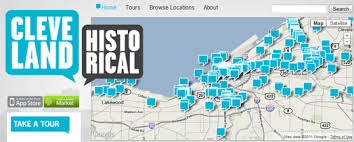
I intend to use the tool Cleveland Historical  (https://clevelandhistorical.org/) to transform what is an expensive physical, but relatively passive historical tour of the History of Cleveland Women into a digital engagement experience.

“ Cleveland Historical is a free mobile app that puts Cleveland history at your fingertips. Developed by the Center for Public History + Digital Humanities at Cleveland State University, Cleveland Historical lets you explore the people, places, and moments that have shaped the city’s history. Learn about the region through layered, map-based, multimedia presentations, use social media to share your stories, and experience curated historical tours of Northeast Ohio.

The use of this mobile app enable will be an instantaneous window into the past.  A GIS locater brings up historical stories that occurred in the immediate area of the phone.

In place of a formal group tour, use of this application will allow students to track their daily activities and recognize how they move within the city.  Checking Cleveland Historical as they progress through their day will acquaint them with figures and events of the past who traveled where they travel.  This aspect of the “tour” will present a ‘Hall of Fame’ and start the process of connecting past to place.  It will not however, provide any sense of chronology, continuity or a deeper understanding of context & time.

These sensibilities will need to be created through other activities and engagements.  Students will work collaboratively in groups to share what they have learned in their various locations and build a concept of chronology and time.  Where individuals located in multiple sites across the city, what is similar within a group, what was different?  Was time a factor connected to place and how?

The use of technology and the means of transportation used around the city will also facilitate a larger conversation about the technologies we use today.  How does technology change daily life and opportunity?  I will also ask if the students accessed other apps to find more details about a particular individual or location?  Would this information have been accessible in the past?  What resources are available to find out about people today?  What resources do we use to find out about people of the past?  This makes a lovely segue into primary sources.

This application will also demonstrate how history has been collected, remembered and built. After using the app, we will discuss the type of history that is promoted.  What stories are included?  Are their missing stories?  What do the buildings in the areas we work, play, eat and shop, tell us about ourselves?  Is there any of this evidence demonstrated in the app to develop a sense of historical context?  How do we know what was presented, is true?  The digital technology is a tool, but it is a very useful tool for creating opportunities to engage with the past and draw upon resources.  It provides the opportunity to teach that collecting is only the first step in developing a history that involves reflection and questioning about the deeper connections and meanings  of what is visible and invisible.

Is Digital History More Disruptive?

Reflections on the question: How have external expectations constrained teaching and learning in history, and how might the digital turn disrupt those constraints?

Historians have to explain what they do, basically we have to explain why our stories may not be interesting to people who would rather be watching historical movies, docudramas or curled up with a novel.  Historians have “rigor”, in other words, our stories are important and true.  It is human behavior to retrench and defend when attacked.  The discipline of History has two internal cultural reactions which have resulted in removing the discipline from the forefront of society – we talk to ourselves and we rely on the evidence of our practices, which others cannot see or understand.

Talking to ourselves.  Our authoritative sources are documents and archives, which few people wish to spend time in and to gain authority, historians cite other historians.  It appears that will not change as it is even included in Caldor and Steffes, Measuring College Learning in History’s list of essential concepts and competencies, which makes a valiant effort to identify, define and create measurements for the activity of historians, twice!  Historians trace the evolution of thought through other historians.  This means you have to ‘know’ the other historians (historiography) to participate in half the dialog.

Evidence & Historical practice.  The common person sees an object (in the broadest sense of the term) of the past as interesting but useless.  Historians value objects of the past as clues upon which to build connections to stories that have influenced our own.

History is so ‘academic’, but helpful in certain situations.  Its place in learning is revered, but no one is quite sure why.  Historians will tell you their work is important.  Public monuments, parks and museums, where it is so prominently displayed, reinforce these conceptions that history is remote, but essential to our identity and understanding of ourselves.  No one wants to be reminded of their faults, mistakes or shameful episodes from their past.  So when a modern historian calls for “Uncoverage” (Lendol Calder) it is definitely a dangerous idea.  Better to stick with the story we remember and can recite, it helps us conform and sets a tradition for our children to follow.  The willingness of historians to be confined in that box in order to maintain the public’s respect and an established place in the public curriculum has had the unintended consequence of people graduating and relegating history to their school days or tourist sites.

Digital tools and digital historians are threatening to do what the social historians of the 1960’s and 70’s threatened to do – make history visible, accessible and relevant.  The new fields of history brought new populations into the study of American history…African Americans, Native Americans and women, but relied on traditional methodologies and failed to move beyond stories of famous individuals in a meaningful way.  Histories that framed separated groups bred ‘identity politics’ of competition that did not serve American society any better than a false conception of a ‘melting pot’.

Digital technologies stripped any and every thought or process down to the barest elements of 1 or 0, on or off.  But 1’s and 0’s are aligned, arrayed, combined, shuffled, sorted and stacked to make all kinds of complex processes happen.  Historians entered the digital world to see how technology could help organize records and make research easier.  (Roy Rosenzweig and Sam Wineburg)  The process and frustrations of learning new systems caused a rethinking of traditional historical practices: engagement in the process of research and collaboration.  Historians had to explain what they did to or needed computer systems to do.  (Anne Hyde, Calder & Steffes) As the ‘processes’ of history are broken down into its elemental parts, it is easier to see how they can be aligned, arrayed, combined, shuffled, sorted and stacked – differently.  Communicating the process has become accessible, just like the documents and histories of “the public” can now be included in historical analysis because “big data” can be analyzed quickly.  This new history touches more people, average people who can now see how ordinary tasks are historical. (Schrum, et al.)   When we start looking into the stories of everybody, the ‘pretty pictures’ get messy.  The story of “America” becomes broader and more complex, because more stories are included.  For historians, solving the puzzles of human events and behavior is the excitement of “the work”, it is increasingly possible to engage more people in “the work” and the excitement rather than just showing them the picture.