Tag Archives: Smithsonian Division of Medicine and Science

DPH 794: Post 8 InTERNSHIP ReflectIonS

My internship was to create a Smithsonian Learning Lab exhibit that forged a bridge between the Smithsonian National Museum of American History: Medicine and Science Collections Washington, D.C., and those of the Western Reserve Historical Society, Cleveland, Ohio.

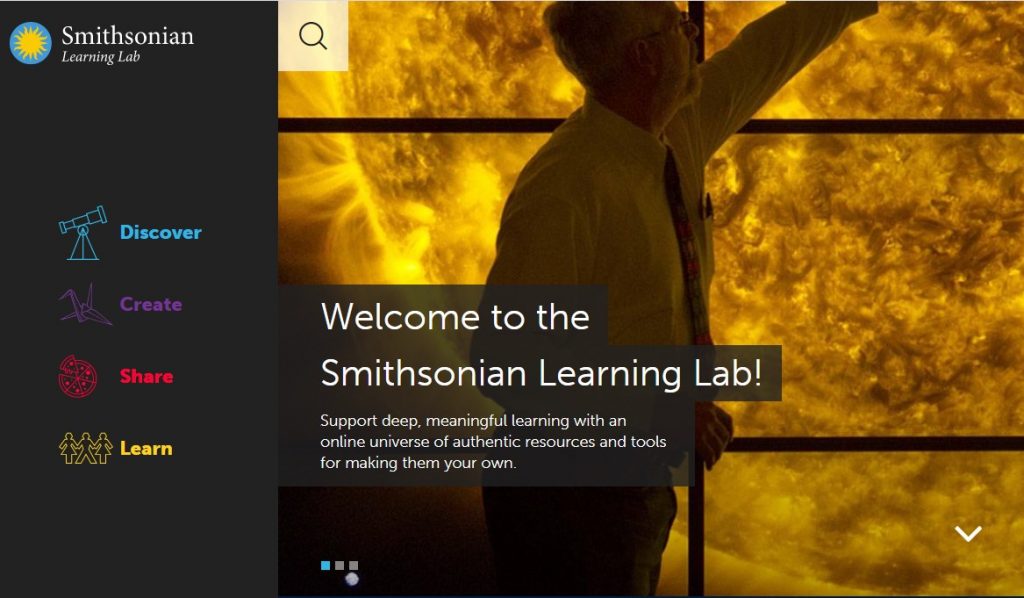
Image of the Home page of the Smithsonian Learning Lab

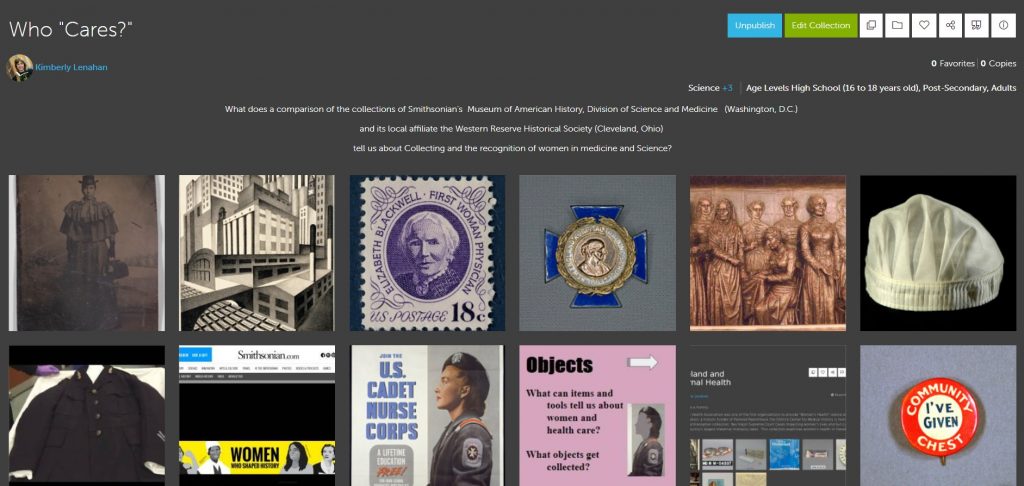
                 Please visit:  “Who Cares”  http://learninglab.si.edu/q/ll-c/3LXidXoP4xkEhBvH

Image of the exhibit created by Kim Lenahan entitled "Who Care" features thumbnails of exhibit artifacts.

“ Because of my internship, I am…”

Proud of the work accomplished: as it broke new ground in highlighting women’s achievements in the area of medicine and science, that it has provided evidence for how women are seldom recognized or their artifacts collected; that it encourages attention to be drawn to women’s lives and stories; that a novel way of promoting this history has been developed on an innovative platform that will encourage use of the collections of NMAH Medicine & Science & the Western Reserve Historical Society.

Comforted by recognizing historic limits of medicine and science, which councils’ patience when I am caring for family members, or in the face my own health challenges. I am more empathetic with the striving of myself and others to achieve recognition. I commiserate with and seek to encourage those who are quiet or who have been overlooked, viewed as ordinary as their heroism may be greater than those whom we applaud.

More courageous having attempted something new, recognized it was more difficult than anticipated and still persevered.  I am less fearful of looking foolish, breaking something, or violating rules.  I am grateful for the space and opportunity to explore, collaborate with experts, rethink the use of standard practices, technological tools, and the limits of location, resources, and connections.

Wiser for having viewed my understanding of women, healthcare, place, and significance from an entirely different perspective.  More thoughtful for having observed and experienced ‘teaching and learning’ in a different environment.

Committed to restoring what has been hidden, to being more intentional in valuing the students, the colleagues, and the people I interact with daily; to collecting their stories and their heritage and thereby the indomitable power of the human spirit.

DPH 794: Progress Blog

What do you care about?  What do You collect?

The purpose of the Smithsonian Institute, embedded in the will of James Smithson (1765-1829) the illegitimate son of an English Duke and a wealthy widow… who never stepped foot in the United States, is “The increase and diffusion of knowledge”.[1]  “With 19 museums and the National Zoo, the Smithsonian is the largest museum, education and research complex in the world”.[2]  The purpose of the Smithsonian National Museum of American History (NMAH) is “the collection, care, and study of objects that reflect the experience of the American people,” which aligns with Smithson’s interest in the American experiment. [3]   The Division of Medicine and Science within the NMAH “acquires, preserves, studies, and interprets the material culture of the biological, medical, and physical sciences.”[4]   My purpose and task is to connect my regionally focused research on ‘Women and Healthcare in Cleveland’ to the national impact of women as demonstrated through an examination of the collections in Smithsonian Division of Medicine and Science and its local affiliate the Western Reserve Historical Society.[5]  This research aligns with the strategic goals of the current Smithsonian Vision and its American Women’s History Initiative–Because of Her Story, “one of the country’s most ambitious undertakings to research, collect, document, display and share the compelling story of women.”[6]

If one attempts to research the story and influence of women, it becomes immediately apparent that “her story” has not been collected or documented in traditional historical catalogues and methodologies.  “She” does not lay claim to the firsts, the foundings, and rarely appears among the famous, unless a fatale.  To uncover the evidence of women at the local level is difficult; the evidence of women at the national level is almost non-existent.  How can it be that half (50.8% in 2010) the population is so poorly recorded?[1]  Where are the women?  I am using the Smithsonian Learning Lab as a tool for exploring and communicating the connections between Cleveland and Washington, D.C.

“The Smithsonian Center for Learning and Digital Access created the Smithsonian Learning Lab to inspire the discovery and creative use of its rich digital materials—more than a million images, recordings, and texts. It is easy to find something of interest because search results display pictures rather than lists. Whether you’ve found what you were looking for or just discovered something new, it’s easy to personalize it. Add your own notes and tags, incorporate discussion questions, and save and share. The Learning Lab makes it simple. 

By encouraging users to create and share personalized collections of Smithsonian assets and user-generated resources, the Learning Lab aspires to build a global community of learners who are passionate about adding to and bringing to light new knowledge, ideas, and insight.”[2]

Women are not the only people “missing” from the historical record in general and museums in particular.  There is a relatively large literature dating to Fred Wilson’s ground breaking exhibit, “Mining the Museum” in 1992. Persons of color and uncomfortable ideas, often share the same fate and compound our ignorance of our full and authentic past.  For my project, I must examine what can and has been collected and consider what is missing.  Or, and I think this is more accurate pursuit, find the ‘hidden women’.  Aside from the few who managed a first or married a first or miraculously achieved some rank of notoriety, women are nameless in the collection.  But they appear in photographs as assistants, they are the workers in the companies whose products have been collected, they have taken care of supported both the family and the great scientist while “He” achieved success.  Reminiscent of the television sitcoms of the late 1960’s Bewitched and I Dream of Jeannie, women made the magic happen behind the scenes.  Reflecting on this type of history is not quick and easy.  Documenting it (necessary for a historian), is a nightmare.  However our collections reinterpreted, may hold some important knowledge treasures that have been lost in the ‘American Experiment’ as it exists today.

The work continues.


[1] U.S. Census. “Age and Sex Composition:2010.”  https://www.census.gov/prod/cen2010/briefs/c2010br-03.pdf  accessed 11/23/19.

[2] Smithsonian Institute.  “About the Smithsonian Learning Lab.” https://learninglab.si.edu/about  accessed 11/23/19.  


[1] Smithsonian Institution. “Purpose and Vision.” https://www.si.edu/about/mission accessed 11/23/19.

[2] Smithsonian Institution. “About the Smithsonian.” https://www.si.edu/about accessed 11/23/19.

[3] Smithsonian Institution. “Mission & History: National Museum of American History. ”https://americanhistory.si.edu/museum/mission-history  accessed 11/23/19. 

[4] Smithsonian Institution, “Division of Medicine and Science.” https://americanhistory.si.edu/about/departments/medicine-and-science  accessed 11/23/19.

[5] This Internship is part of the Roy Rosensweig Center for History & New Media: Digital Public Humanities Certificate Program within George Mason University.

[6] Smithsonian Institution. “Purpose and Vision” & “Because of Her Story” https://womenshistory.si.edu/about  accessed 11/23/19.
Finding a Thread

Systems are the way we track and keep information. However just like people, institutions conceive and use information differently! Learning them and discovering how they connect can take time.

First woman to earn a Ph.D. in Computer Science

There are large gaps in our awareness of the role and actions of women. A ‘gendered assumption’ has existed in Western Civilization since the beginning of it; that women: were inferior, not to be trusted and powerless (Mary Beard explains this phenomena brilliantly). Since women’s thoughts and actions were not considered significant, they were neither acclaimed or recorded. As a result women’s role in history has been overlooked and their contributions undervalued. Re-tracing this “role” is important to really understanding our current society and civilization.

I am on a journey to connect and understand the ideas and actions of women over time. How can we understand how women shaped the system of health care in the United States? They have obviously used it! Less obvious is how they have influenced it.

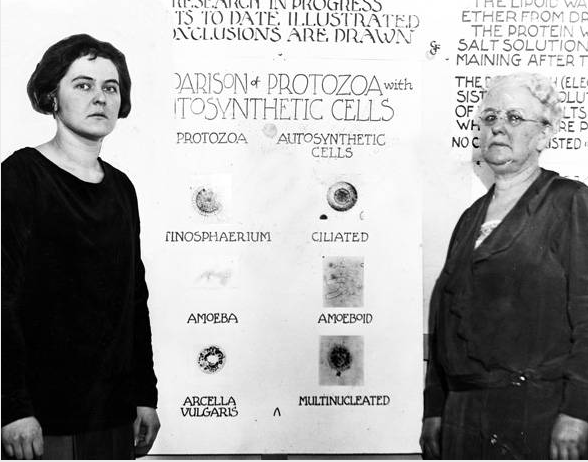
Dr. Amy Farley Rowland & Dr. Maria Telkes  Discovery of autosynthetic cells.
Picture taken 12-31-1930
Dr. Amy Farley Rowland & Dr. Maria Telkes Discovery of autosynthetic cells with Dr. George Crile Cleveland Clinic Picture taken 12-31-1930

Working in multiple archives has proved somewhat challenging. So I have decided to pursue this digital project in a new way — contextually! Starting from searching the archives directly, for connections linking specific physical evidence between Cleveland’s Western Reserve Historical Society and the Smithsonian Division of Science and Medicine, has not yielded any results. The next iteration of this project is going to begin with specific Cleveland women who were involved in changes in medicine and health care.

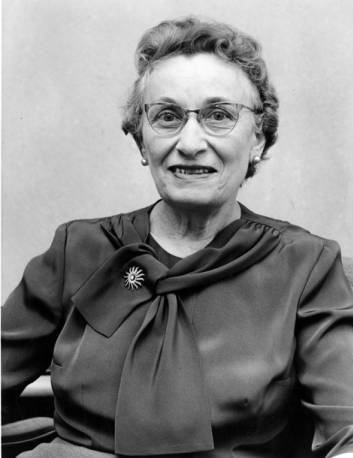
	"Dr. Sarah Marcus, president of Women's General Hospital" -- photo verso. Portrait of Dr. Marcus dated 1959.
Dr. Sarah Marcus Courtesy of The Cleveland Press Collection, Michael Schwartz Library, Cleveland State University

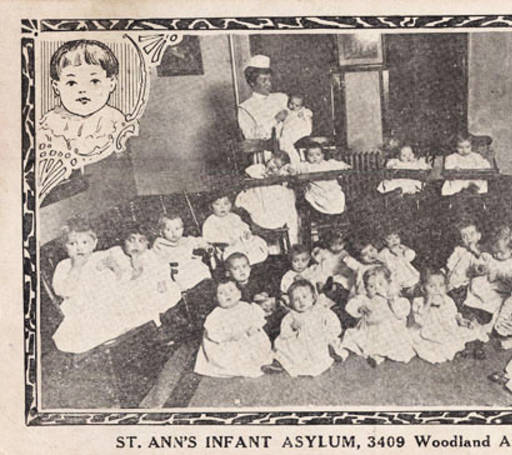
Women like: Rowland & Telkes, Dr. Sarah Marcus and Lulu Greves and the hundreds of nurses who cared for Clevelanders.

A group of 20 infants with nurse circa 1910.
St. Ann’s Infant Asylum c 1910 Courtesy of The Cleveland Press Collection, Michael Schwartz Library, Cleveland State University

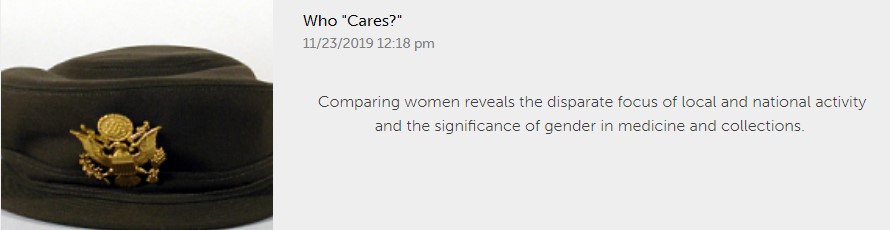
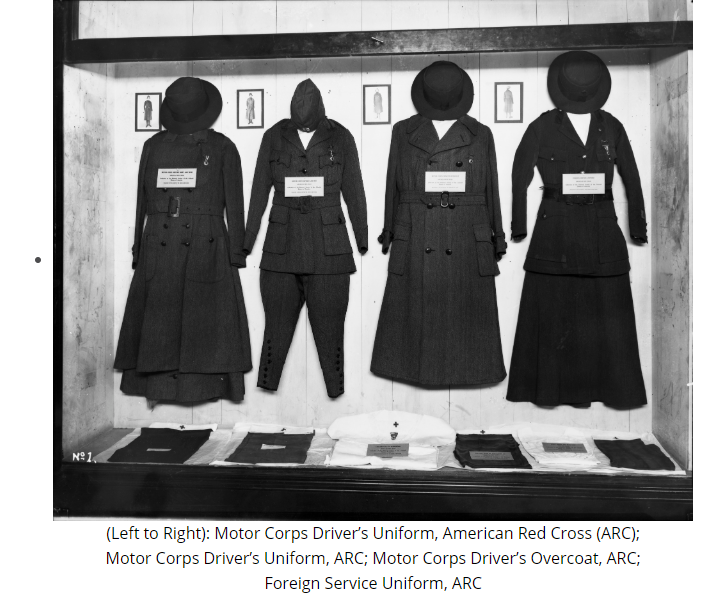
I have not located Drs Rowland or Agatha Hodginsm Nurse Anesthetist who worked with the Lakeside Unit in WWI (see Andre’ Van Zundert’s page) in the Smithsonian Database. It is possible to learn more about them from artifacts and exhibits such as Women in World War I . They would have worn uniforms similar to these:

Women in WWI: Women’s Uniforms National Museum of American History

It is a start to understanding these women and weaving the story of their past.

Exploring Questions

What about your internship has been an eye-opening (new or unexpected) experience? What were your initial expectations?

The task in which I am engaged seeks to understand the significance and impact of women’s role in medicine and health care broadly.  The current iteration is focused on identifying the connections and differences/similarities between national and regional experience.  The vehicle for accomplishing this analysis is a comparison between the collections of the Smithsonian Division of Medicine and Science and the Western Reserve Historical Society. 

Recognizing there is an entire body of scholarship on collections, who collects, rationale and preservation issues, etc.; this project focuses on what can be determined about women’s action and influence on healthcare through the analysis of two comparable collections: one nationally focused and one regionally focused.  There is an assumption that since the Western Reserve Historical Society is a Smithsonian Affiliate, their general standards, practices and goals are similar enough to enable a rough comparison.  The unexpected challenge that I am facing is searching the collections effectively.  The archives for the institutions are structured quite differently.  So while I am sure both institutions have the archival material I need; identifying and collecting these resources has been more time consuming task than anticipated.

This past week I attended an annual Digital Humanities Conference.  I considered that even the title is an oxymoron…digital down to the smallest element and humanities which is a full expression of the human experience. As at most academic conferences, new works are presented and the field of study is refined and shaped by the experts and participants who discuss the administrative issues of the year.  Since Digital Humanities is a new field, the challenge of framing the language, tools and practices of the discipline is a significant portion of the conference and important work.  Identifying standards of expertise and hierarchies are important for remuneration and academic credentialing.  However these processes and vocabularies create distances and barriers.  What does the public lose?  How are the humanities constrained and limited when a group of experts claim control over a field?

The grand institutions claim expertise and protect their collections.  The academic disciplines control who can claim authority and expertise.  Their commitment is admirable and the services of collection, protection and preservation vital.  Yet, both raise obstacles and barriers of access to the very material they are trying to promote.  The struggle that I have been facing is frustrating.  While I am used to surmounting administrative hurdles, having available resources and yet not having the common language or processes to facilitate their analysis, is a new thing for me. 

Have these expectations changed now that you are half-way through? How? Why?

While the task has become more time consuming, I have not given up.  Rather, I am widening my understanding and learning the how and why of the institutions with whom I am working.  It is our language that expresses our identity and world view.  The languages of organizations, fields of expertise and the processes we use express identity and meaning.  Communication requires learning these meanings and being able to share them.   Researchers are bridges between worlds, crossing into unknown or hidden territory and bringing this new information back to be used in a new way.  These challenges are reminding me of the need to make my work transparent and to pay significant attention to how I am communicating the ideas that arise from it.