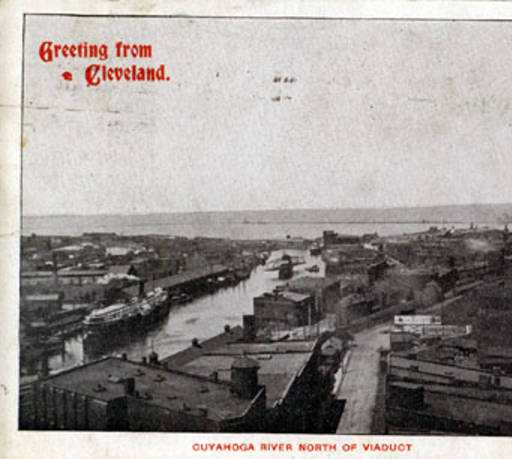
It is Winter in Cleveland, OH. Here on the North coast when the ice comes, the “shipping season” comes to a halt. Ohio was the Western frontier when America was young. The fastest way to the interior of the new country was down the St. Lawrence Seaway or up the Mississippi River. The building of the Erie Canal in the 1830s was Cleveland’s first boom period. Our location in the North, the abundance of immigrant workers and again our importance as a port made Cleveland a hub for supplying Union Troops during the Civil War and its location between the ore mines of the Upper Great Lakes, coal mines of West Virginia and oil fields of Western Pennsylvania made it a primary hub of manufacturing after the war.
But the country grew Westward, it passed us by. Airplanes and Amazon have taken their toll on these Midwest rust belt cities. In the winter, Cleveland waits, hoping for Spring.
The current political waves are choppy and unpredictable. Surrounded by books I am cozy in my living room. With my computer and technological devices I could reach out to the world, but it is winter and I am just waiting for circumstances beyond my control to resolve themselves. According to the most erudite of all scholars, “Sometimes, when I am going somewhere, I wait. And then somewhere comes to me” (A.A. Miline, Winnie-the Pooh). Winnie and winter remind us humans that we are not always in control. We live day to day, assuming it will turn out as we plan, but as we examine the past we recognize things happen and lives are impacted.
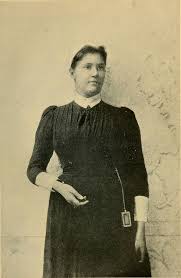
Isabel Hampton Robb, known by nurses as the mother of Nursing Education, was the Superintendent of nurses and principal at Johns Hopkins School of Nursing. She was a force to be reckoned with in training nurses, publishing textbooks, advocating for and organizing the nursing profession. Robb came to Cleveland as the bride of Dr. Hunter Robb who was hired to teach gynecology at Case Western Reserve University in 1894. It would have been socially unthinkable, then, for a married woman to “work”, so she organized and wrote. Mrs. Robb traveled to meetings, developed nursing practices and wrote the rules of efficiency. Until she died abruptly in a streetcar accident…in downtown Cleveland…in 1910 …..at the age of fifty one.
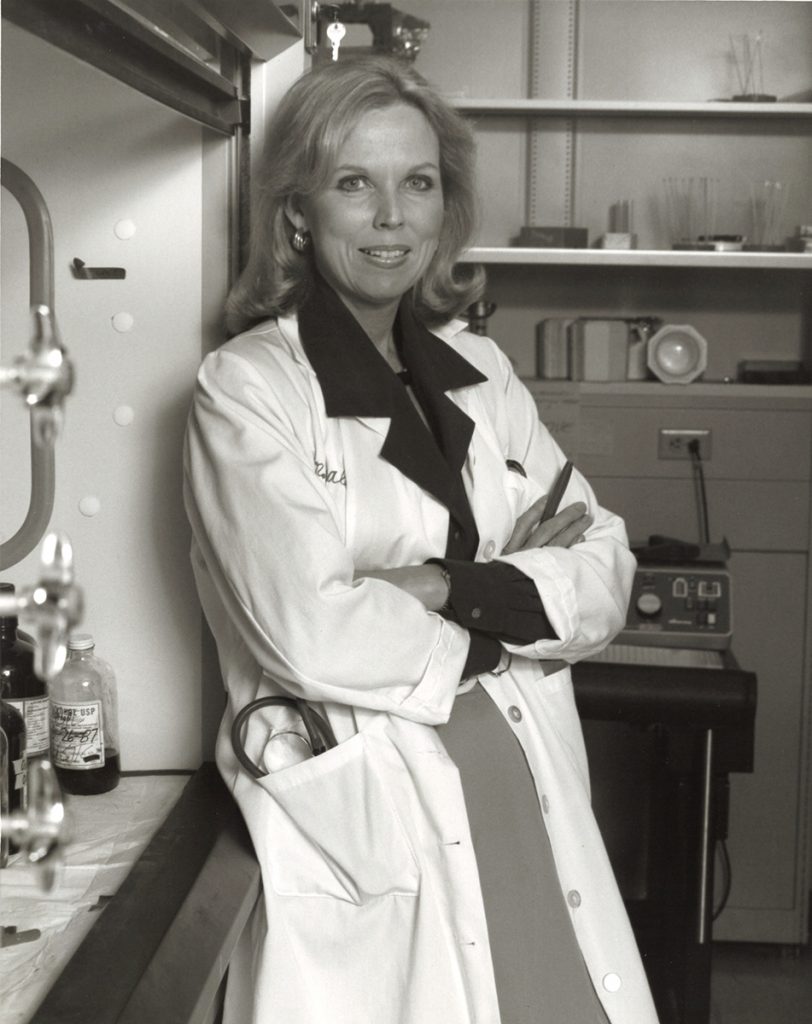
Bernadine Healy, Vassar alumna, Harvard Med, Cleveland cardiologist, was the first woman to be named head of the National Institutes of Health. She had previously successfully reorganized and managed the Cleveland Clinic’s Research Institute. A staunch Republican, she was a natural for George Bush to choose to reorganize and revitalize the NIH. Healy launched the Women’s Health Initiative, a pioneering and critical study of women’s health that resulted in significant changes in the diagnosis of heart disease, and improved understanding of the role of estrogen in the body and the treatment of cancer in women. The tides of politics shifted, Bill Clinton, a Democrat, became president and Healy stepped down. Healy later ran into difficulties with the embedded staff and board of the American Red Cross,complicated by organizational difficulties of the Red Cross’s response to 9-11. She left that organization in 2001. Dr. Healy then became a TV health commentator and author, but her brain cancer returned. She died in her home in Shaker Hts. in 2011, at the age of 67.
I imagine what you are thinking, is this author obsessed with death and what does this have to do with “Digital Public Humanities”? These women were particularly brilliant and beautiful and renowned. Separated by over one hundred years, they cared for people, influenced medicine, and had lives that made a difference. They too lived through Cleveland winters with their families. Digital Public Humanities gives us a lens to look at other lives–perhaps those with less notoriety, but no less important to their families and the people for whom they care. In my research and in my internship, I hope to uncover the work and connections of Cleveland’s women, using new tools. But the political winds are blowing and the times are uncertain. Persons working for the government today are unsettled and afraid to make plans. We are waiting for forces beyond control. Medical practitioners try to uncover patterns of disease and wrest control. Politicians try to force their will and navigate our society’s future in alignment with their goals. The power of the historian is to look backward and see how these threads of life, both wild and controlled, intertwine and eventually create a past worth remembering. We find and share stories in ways that help us understand one hundred years later, how we got here.
A quote from Isabel Hampton Robb is inscribed on the Johns Hopkins University’s School of Nursing building, “Nurses are trusted with the most precious thing on earth: the life, health, and happiness of other human beings.” I have been entrusted to tell the stories of some nurses and other women who hoped to improve the lives around them. In Cleveland, I am hopefully waiting for the thaw and for Spring.
