Category Archives: Creative Commons Sources

Playing with Palladio

Just like a kid at a table, I was given some preformed clay and told to make some beautiful works.  Not having to do “the set up”, Palladio was relatively easy to get “into” network analysis and start messing around.   Palladio is a “general-purpose suite of visualization and analytical tools” that enables researchers to map and graph humanities data. (http://hdlab.stanford.edu/palladio/about/)  When we are discussing data here we mean “corpus” (techie term – compilations for the rest of us) of, in my case, the historian’s research (people, events, addresses, dates, contacts, documents, etc.).   The data can be vast amounts of material (text, photographs, tables, etc.) or relatively small collections.   The software in the platform through the use of algorithms (sets of directions) transforms our element (node) into a “plotable point on a map or graph.  The schema for assembling, disassembling and reassembling produces various kinds of maps, graphs, constellations all with the associated metadata accessible.  These manipulations draw (“edges” for the techies) “connections and patterns” (for the rest of us) that can be seen.   These “visualizations” foster enhanced understanding of the data itself and make obvious how elements within the data are connected or not and because of the ability to “play” (isolating “ALL” the variables and being able to test relationships or time series, in space or against a physical map) new questions are brought to the researchers mind, hypothesis can be verified and various problems or possibilities can be explored and addressed.  Our ‘Ideas’ become pictures that enable us to work with them, without losing track of them, from various perspectives.

The designers of Palladio built it for mapping the correspondence metadata of a project called “The Republic of Letters” which explores the connections of Enlightenment Intellectuals and  the transference of ideas through their letters.  (Visualize massive amounts of text in multiple languages).   Palladio understands the historian’s mind and methodology,

“It is an environment that supports thinking through data. Like so many historical sources, the (data) is incomplete in unpredictable ways. Historians work with fragments of information from the past, not complete data sets. ..tools need to support scholars in building an understanding of the historical material through working with it. To create Palladio, we had to externalize what is a very internal, individual, thought process. “  http://hdlab.stanford.edu/palladio/about/

My trial experience working with Palladio centered around a data set created by Prof. Robertson from the Works Progress Administration Slave Narratives. (https://www.loc.gov/collections/slave-narratives-from-the-federal-writers-project-1936-to-1938/about-this-collection/ ) Since I was able to upload ‘Palladio prepared data’, I was able to avoid a time consuming task of aligning my data for Palladio manipulation.

It was relatively fast and easy to create the primary table (main data set) against which other tables (elements of the data) could be manipulated.  For the Slave Data, the primary data set was the Alabama Slave Interviews and the subtables were identifications of the former slaves that were interviewed and data about the interviewers.  Once the tables are created, they can be analyzed with various tools including locating the slaves/interviews on a map, drawing connections between an interviewer and the slaves interviewed, creating network analysis of various types by the individual elements within the data sets.  The “visualizations” I made included maps, string and cloud diagrams (okay I admit– I got interested and played with time series and graphs as well).   It was fascinating and time consuming to try different arrangements that suggested unique relationships, impact of place and Slave occupation.  Also revealed were limits in the veracity of the data (not a reliable reflection of slave tasks or a true reflection of statewide representation), but also new issues to consider, such as how does the gender of the interviewer impact the questions used in an oral history interview?

Palladio describes itself as “a tool for reflective practice.”  Both Scott Weingart (“Networks Demystified” Blog December 5, 2013) and Ryan Cordell (“Reprinting, Circulation and the Network Author in Antebellum Newspapers”),  call to our attention that compiled data has its issues, in the same way normal archival research has gaps and biases and snags.  It is easy to see how visualizations could cause erroneous interpretations.  And truly the data is just a picture of the facts and still requires interpretation as to its meaning and significance.  So the mind and integrity of the historian is still crucial to good history…but new Playdough is always fun and creative!

“Seeing” the Slave Narratives with Voyant

Voyant Tools  is a web-based text reading and analysis environment designed to facilitate reading and interpretive practices for digital humanities and the public.  http://voyant-tools.org/docs/#!/guide/about

Voyant Tools is an entry point – software that allows you to do basic computer-assisted analysis of data.

Text or edited and prepared data can by studied and analyzed in new ways and ‘plotted’ so that it can be saved and shared with others.   Using Voyant allows others to explore your data through interactive panels that can be inserted into online publications and presentations.   Voyant can also be used as a development platform to design new forms of analysis and visualization.  The main visualizations are: word frequencies, word clouds and “distinctive words”.

I am also including a link to the scatterplot for this corpus.  Clicking on the “Analysis” option > Principal Component Analysis provides  further evidence of the significance of “race” as a feature of slave experience.   http://voyant-tools.org/?corpus=2d0c91a1da599627fea6d35d607795a0&view=scatterplot&stopList=keywords-96814a63d28a5e281f75e02c891dcdbe


The trends graph indicates the significance of location.

I found Voyant to be an interesting tool which will be of great use when texts are clearly comparative.  It is great for collating data!  It provides the ability to analyze text to see trends in language and usage.  The word cloud is interesting and illustrative.  In the Slave Narrative data set on which I was working the common words were Old (which I ignored as the subjects of the text were elderly), Come and Time.  Whereas I would have expected more direct slave references which were secondarily popular.  The nature of the documents (by state) also provided insight into regional variations, but also made me recognize the states from which the largest number of narratives was drawn, would bias the representations and conclusions.  Understanding the Data (Musher, The Other Slave Narratives) is critical to recognizing the significance of patterns.  Having a larger context besides the quantitative data is essential for interpretation.  Also it became evident as I was working with the Data, that my choices were subjective and these choices would also “skew” the results…my lack of technical prowess also would play a role in the accuracy or distortion of the results.

For the new user….agh!  I am sure this tool would be easy for humanists with digital strengths.  For the digitally challenged, it is probably pablum, and a good entry point to Digital Mining and Modeling tools…but we are entering a “Brave New World” where the faint hearted must learn to persevere.  I believe spending some time in the on-line guides would be very helpful.  I played around the examples and information on Voyant’s website, but before attempting a larger project – I would try to learn to manage and navigate the tool better.  Time being an issue, I could not do that.  My simple tasks became time consuming, because if I tried to backtrack or change some aspect of the data my progress was lost.  Trying to return to old screens or navigate between the tools was not as “friendly” as I hoped.  Transforming from a historian who uses traditional sources of evidence to build up thesis and wider connections – I miss the library shelf (Underwood, Theorizing Research Practices).   it is a dramatic change to reverse and drill down into the minutia of checked boxes, single characters and itemizing the search.   The good new is that when you get interesting graphs or can make unexpected connections and conclusions…ya feel great!

“Learning is not attained by chance it, it must be sought for with ardor and diligence.” Abigail Adams

A review of the American History & Life Metadata Search for Popcorn

A search for related information about my Whirly Pop popcorn maker yielded:  Popped Culture: A Social History of Popcorn in America” (Book)

Bowl of popped corn
Wikimedia Commons

It is very important that the Metadata mentions after the title that this object is a book.  Since I searched for popcorn…it might have been anything.

The American History & Life Fields included the Author (Trudy Eden), the Source  (H-Net Reviews in the Humanities & Social Sciences. Jul2004, p1-6. 6p.); The Historical Period (1830 to 1999); The Document Type (Book Review) ; Subject Terms POPCORN, NONFICTION, SOCIAL change; Keywords (Andrew F. Smith important as he is the author of Popped Culture),  Reviews & Products (This took me to another review by Philip Hiscock in Ethnologies), Abstract, Notes (incl. Publication Information: Washington: Smithsonian Inst. Pr., 2001. 264 pp.), Author Affiliations (Department of History, University of Northern Iowa), ISSN (1538-0661), Accession Number (15099661)

This Metadata did not include a Description or Summary Field that would have given me an idea about the review.  Although the Period was identified, the context of the object was not.  A “Review” for social change is not the same thing as “Review” for ethnography (which only came from knowing the nature of the publications for the different reviews). The publication information did not let me know if the book was drawn from an exhibit or independent research on the topic – which might have been included as part of the exhibit).

I appreciated the embedded links made searching the related sites and information quick and easy.

The Author information and Reviews and Products information made it possible for me to “place” this review in some of the fields of history to which it belongs (ethnography and Social change).  It did not tell me if the reviewer is a significant person in the field.  The subject field was very limited as it did not lead me to any other potential resources or search terms for my Popcorn maker – like Cooking or any information about the location of the subject other than (America) or its connection to industries like theaters or circuses.  It did not identify related materials (if it was in an exhibit) or if this book covered the entire history of popcorn or just a period of popcorn or if this was the epitome of Popcorn and there has been a decline since.

My search of the metadata of the American History & Life reinforces my conclusions described in my Search Review.

Schlesinger Library on the History of Women in America

http://guides.library.harvard.edu/c.php?g=420228&p=2866121

The Location of the “Rights” Statement is at the bottom of the homepage:  “Except where otherwise noted, this work is subject to a Creative Commons Attribution 4.0 License. Details and Exceptions.Creative Commons 4.0 License icon”

The Schlesinger Library contains Archival Collections of Famous Women, Radcliff Women and Women’s Activists including private papers, Family papers, Scrapbooks, Organizational records, Oral History Transcripts and recordings, Magazines and Newsletters.

The Women’s Rights Collection includes correspondence, journals, notebooks, speeches, financial documents, reports, minutes, membership lists, agendas, bulletins, pamphlets, manuals, articles, clippings, maps, scrapbooks, photos, posters, memorabilia, plays, books, etc. Highlighting the work done in Massachusetts, the collection primarily documents the suffrage movement and also the gains for women in government participation, protective legislation, and employment opportunities after 1920. Includes papers of and about little-known women, suffrage leaders, and professional women; records of suffrage groups; and information on international peace activities.

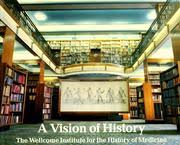
The Wellcome Library

https://wellcomelibrary.org/collections/digital-collections/

The “Rights” statement is located at the bottom of the home page:  “Except where otherwise noted, content on this site is licensed under a Creative Commons Attribution 4.0 International licence. 
Page last updated: 07 September 2017 © Wellcome Trust 2017″

The Wellcome Digital Collections include: Archives and Manuscripts on the History of Medicine in Britain.  Medical Books, journals, reference and electronic references on medicine, allied scientific disciplines, social sciences and humanities.  Medical collection of medical and scientific literature 15th century – present.  An Art Collection of 250,000 prints, drawnings, paintings, photographs and media 14th century – present. Asian collection contains manuscripts and printed items from Asia and North Africa.  Moving Image and Sound Collection includes film, video and audio on all aspects of medicine 20th century – present

Searchable databases subject, date, etc.

The J Paul Getty Museum

http://www.getty.edu/museum/

At the bottom of the title page, please find Terms of Use:
The J. Paul Getty Trust © J. Paul Getty Trust
Terms of Use  for the “Rights Statement”.

The J. Paul Getty Museum collects, conserves, exhibits and interprets works of art of outstanding quality and historical importance.

The J. Paul Getty Museum at the Getty Center in Los Angeles houses European paintings, drawings, sculpture, illumnated manuscripts, decorative arts, and photography.  Pre history to the Present.

The J Paul Getty Museum at the Getty Villa in Malibu is dedicated to the study of the arts and cultures of ancient Greece, Rome and Eturia.