Third Piece of the Puzzle: FCW

FINDING CLEVELAND’S WOMEN: Audience

Students in the UST 112M History of Cleveland Course for Mandel Scholars Academy students attending Cuyahoga Community College

“The Jack, Joseph & Morton Mandel Humanities Center provides a distinctive academic experience that fosters the study of the humanities through innovative teaching, collaborative/team learning opportunities, seminars and lectures, and civic engagement opportunities designed to expand critical thinking skills and develop leadership skills. The mission of the Center is to provide a unique environment for meeting the intellectual and academic needs of Mandel Scholars in a holistic manner and to broaden engagement in humanities scholarship.”

Mandel Scholars are highly motivates students with a GPA of 3.0 or above.  This diverse (age, ethnicity, race and gender) students come from all areas of the city and their majors range across the academic disciplines of the college.  However, all of the students entering this course will have already taken the HUM 102M–The Individual and Society course.  This course defines what the “Humanities” are and mean. Through exploration of art, philosophies, and scientific views, students are introduced to examining and evaluating the interactions of individuals  and what it means to live in ‘society’.   This course also begins the process of building a “cohort” of students.  In addition to their Mandel classes (1 per semester) they are required to participate in City and Academic engagement activities and eventually they will work interactively in a project with community leaders and partners.

The History of Cleveland Course is the second “Mandel” Course.  The intent is to engage students in thinking about the City of Cleveland as a historical environment and gain a deep understanding of its growth, development and challenges.

CATALOG DESCRIPTION: This course traces the development of the City of Cleveland from the 1930s to the present through experiential and project-based learning activities. This course will discuss the social, political, and economic history of the city through a series of field trips to local historical societies, museums, and tours led by guest speakers and faculty.  Students may be responsible for additional fees for meals and entrance to some locations.

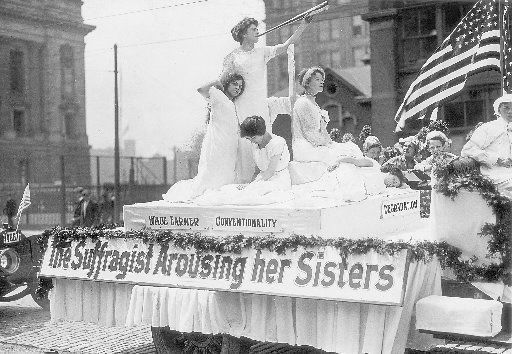
My project is to transform a physical bus tour, that explores the history of women in the city of Cleveland, into a stimulating virtual digital experience for these Mandel Scholars.

A Second Piece on the Puzzle

How will digital media and/or digital tools be important to teaching my target audience one of the essential lessons I’ll be focusing on in my project? What, specifically, about the digital environment will influence what you do and why?

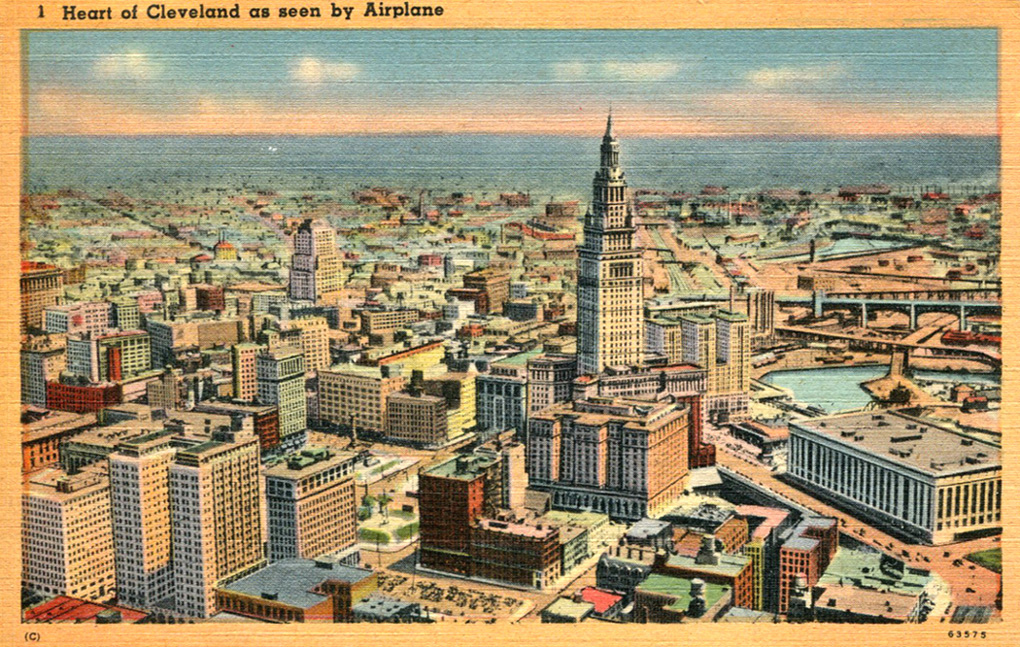
I intend to use the tool Cleveland Historical  (https://clevelandhistorical.org/) to transform what is an expensive physical, but relatively passive historical tour of the History of Cleveland Women into a digital engagement experience.

“ Cleveland Historical is a free mobile app that puts Cleveland history at your fingertips. Developed by the Center for Public History + Digital Humanities at Cleveland State University, Cleveland Historical lets you explore the people, places, and moments that have shaped the city’s history. Learn about the region through layered, map-based, multimedia presentations, use social media to share your stories, and experience curated historical tours of Northeast Ohio.

The use of this mobile app enable will be an instantaneous window into the past.  A GIS locater brings up historical stories that occurred in the immediate area of the phone.

In place of a formal group tour, use of this application will allow students to track their daily activities and recognize how they move within the city.  Checking Cleveland Historical as they progress through their day will acquaint them with figures and events of the past who traveled where they travel.  This aspect of the “tour” will present a ‘Hall of Fame’ and start the process of connecting past to place.  It will not however, provide any sense of chronology, continuity or a deeper understanding of context & time.

These sensibilities will need to be created through other activities and engagements.  Students will work collaboratively in groups to share what they have learned in their various locations and build a concept of chronology and time.  Where individuals located in multiple sites across the city, what is similar within a group, what was different?  Was time a factor connected to place and how?

The use of technology and the means of transportation used around the city will also facilitate a larger conversation about the technologies we use today.  How does technology change daily life and opportunity?  I will also ask if the students accessed other apps to find more details about a particular individual or location?  Would this information have been accessible in the past?  What resources are available to find out about people today?  What resources do we use to find out about people of the past?  This makes a lovely segue into primary sources.

This application will also demonstrate how history has been collected, remembered and built. After using the app, we will discuss the type of history that is promoted.  What stories are included?  Are their missing stories?  What do the buildings in the areas we work, play, eat and shop, tell us about ourselves?  Is there any of this evidence demonstrated in the app to develop a sense of historical context?  How do we know what was presented, is true?  The digital technology is a tool, but it is a very useful tool for creating opportunities to engage with the past and draw upon resources.  It provides the opportunity to teach that collecting is only the first step in developing a history that involves reflection and questioning about the deeper connections and meanings  of what is visible and invisible.

Is Digital History More Disruptive?

Reflections on the question: How have external expectations constrained teaching and learning in history, and how might the digital turn disrupt those constraints?

Historians have to explain what they do, basically we have to explain why our stories may not be interesting to people who would rather be watching historical movies, docudramas or curled up with a novel.  Historians have “rigor”, in other words, our stories are important and true.  It is human behavior to retrench and defend when attacked.  The discipline of History has two internal cultural reactions which have resulted in removing the discipline from the forefront of society – we talk to ourselves and we rely on the evidence of our practices, which others cannot see or understand.

Talking to ourselves.  Our authoritative sources are documents and archives, which few people wish to spend time in and to gain authority, historians cite other historians.  It appears that will not change as it is even included in Caldor and Steffes, Measuring College Learning in History’s list of essential concepts and competencies, which makes a valiant effort to identify, define and create measurements for the activity of historians, twice!  Historians trace the evolution of thought through other historians.  This means you have to ‘know’ the other historians (historiography) to participate in half the dialog.

Evidence & Historical practice.  The common person sees an object (in the broadest sense of the term) of the past as interesting but useless.  Historians value objects of the past as clues upon which to build connections to stories that have influenced our own.

History is so ‘academic’, but helpful in certain situations.  Its place in learning is revered, but no one is quite sure why.  Historians will tell you their work is important.  Public monuments, parks and museums, where it is so prominently displayed, reinforce these conceptions that history is remote, but essential to our identity and understanding of ourselves.  No one wants to be reminded of their faults, mistakes or shameful episodes from their past.  So when a modern historian calls for “Uncoverage” (Lendol Calder) it is definitely a dangerous idea.  Better to stick with the story we remember and can recite, it helps us conform and sets a tradition for our children to follow.  The willingness of historians to be confined in that box in order to maintain the public’s respect and an established place in the public curriculum has had the unintended consequence of people graduating and relegating history to their school days or tourist sites.

Digital tools and digital historians are threatening to do what the social historians of the 1960’s and 70’s threatened to do – make history visible, accessible and relevant.  The new fields of history brought new populations into the study of American history…African Americans, Native Americans and women, but relied on traditional methodologies and failed to move beyond stories of famous individuals in a meaningful way.  Histories that framed separated groups bred ‘identity politics’ of competition that did not serve American society any better than a false conception of a ‘melting pot’.

Digital technologies stripped any and every thought or process down to the barest elements of 1 or 0, on or off.  But 1’s and 0’s are aligned, arrayed, combined, shuffled, sorted and stacked to make all kinds of complex processes happen.  Historians entered the digital world to see how technology could help organize records and make research easier.  (Roy Rosenzweig and Sam Wineburg)  The process and frustrations of learning new systems caused a rethinking of traditional historical practices: engagement in the process of research and collaboration.  Historians had to explain what they did to or needed computer systems to do.  (Anne Hyde, Calder & Steffes) As the ‘processes’ of history are broken down into its elemental parts, it is easier to see how they can be aligned, arrayed, combined, shuffled, sorted and stacked – differently.  Communicating the process has become accessible, just like the documents and histories of “the public” can now be included in historical analysis because “big data” can be analyzed quickly.  This new history touches more people, average people who can now see how ordinary tasks are historical. (Schrum, et al.)   When we start looking into the stories of everybody, the ‘pretty pictures’ get messy.  The story of “America” becomes broader and more complex, because more stories are included.  For historians, solving the puzzles of human events and behavior is the excitement of “the work”, it is increasingly possible to engage more people in “the work” and the excitement rather than just showing them the picture.

First Piece of the Puzzle

This semester I am considering the application of a digital component for the History of Cleveland Course that is taught as part of the Mandel Humanities Scholars Academy within Cuyahoga Community College.  “The Mandel Scholars Academy curriculum nurtures the region’s future leaders through integrated learning that combines classes, seminars, lectures and events focused on civic and community engagement. You will work collaboratively with community organizations and leaders through guided coursework in the humanities — with a special focus on leadership — while learning about the community, our region and its vibrant history.”

Currently Professor David Bernatowicz teaches this course and this semester is introducing the Clio Application 

Another possible project is transforming  physical tours of the city which are currently part of the course into virtual experiences.

We could also utilize or collaborate with the Cleveland Historical application which has been developed by Cleveland State University and also provides access to GIS history.

The direction this product will take, will be determined by consideration and discussion of the following questions and their place within the course itself:

  1. What is the impact of physical space in history? (what is the connection between time & distance?)
  2. How does the conception of time & distance change over time?
  3. What are the factors causing changes in transportation, speed of communication, rie in population, etc.?
  4. How does longevity impact space and power? (What is the significance of where people live?)
  5. How did Cleveland grow and what are the factors in its expansion?
  6. How have changes in laws impacted the quality of life in Cleveland?
  7. What is the impact of ethnic and cultural ties and how has that changed?
  8. What has been the role of individuals in the City of Cleveland? How have the leaders changed and how have these changes impacted urban lifestyles?

It is difficult to imagine a city different from what is seen and experienced every day.  Many of the students who attend Cuyahoga Community College (Tri-C) have never been outside of the city or state.  To imagine the historical context of Cleveland, OH as “The West” or “Wilderness” takes a great deal of historical imagination.  Cleveland as a mid-western city, never had the national history ingrained in its urban identity the same way as other large historical cities (NY, Philadelphia, Boston, etc.).  Although the founding was made shortly after the Constitution was signed, Cleveland experienced its major growth following the Civil War  due to the confluence of water and railroad transportation and the emerging industries of oil and steel manufacturing.  Cleveland at its peak was the fourth largest city in America and for a while the center of national politics.  However, forces such as the decline of the steel industry, the failure of unions, shifting modes of transportation (which made Cleveland a fly over rather than ship through hub) have created the national characterization of “the mistake on the lake”.  The majority of Cleveland students cannot even see remnants of this past.  It’s heros in the latter years, as early as Rockefeller as recent as LeBron James, have made Cleveland a city one is ‘from’.   Often these forces are hidden or come from distant events.  Connecting to their past will strengthen these students understanding of their own identity and empower them to more fully direct their futures.

Revisiting Historiography

I had forgotten.  Lévesque’s work brought back the early days of my graduate training …and at the risk of sounding old – before the days of Microsoft Word and on-line accessible databases.  My fellow students and I carried books – literally stacks of them – and argued the intent and philosophy of history.  While we discussed the schools and evolution of historiography, like Lévesque but in far more detail and lots more authors); I do not recall ever discussing pedagogical theory.  I had come from a research institution and research was my goal.  Over the past year, I have learned (you really can teach an old dog new tricks) that considering the content and style of communicating history is quite important.

Discussion of the historical practices was familiar ground and as Wineburg discusses, so engrained as to be invisible.  It is part of my being and approach to all thinking, not just history…which is another reason why historians contribute more to the world around them, then just history.  Although I have been thinking about the structure of my courses in great depth and including methodological practices akin to those described by Stern and Wineburg and Calder and Lévesque; I had not compiled them as a unique educational theory or “signature pedagogy”, but rather a “Toolbox” which was I think one of my textbooks in grad school.

One of the reasons I enrolled in the Digital Humanities Certificate was to discover: How to reduce the workload of on-line teaching?  I am gathering clues and reflecting on adapting practices: such as replacing physical engagement in archives with virtual engagement with archives).  The reality of on-line teaching is still HIGHLY labor intensive: as course sites must be continually updated and in the on-line environment; teaching can become very individualized leading to the phenomena of 50 classes rather than 1 class with 50 students.  Although Calder’s application is obviously created for ground courses; his concepts of ‘signature process’ would lead to easier revision.

My training was much akin to Sam Wineburg’s I believe and I found it ironic that he credited Roy Rosenzweig with transformation in his historical pedagogy and practice.  As we move to new techniques and resources, it is easy to succumb to the historical fallacy that all change is progress.  What is being lost from the practice of history as we move towards increased reliance on digital technologies and methodologies?  Do we rely too much on remote access and documents?  What are we forgetting to include in our research, now that more documents and commentaries are accessible from our chair than we could ever read?  Are we having conversations with elderly historians or just blogging our thoughts?  A good loss is ‘not having to’ drag around and beg, borrow and buy literal tons of textbooks!

Although I can see and to a large part agree with Lendol Calder’s theory that teaching unseen historical practices is more important than exposure to the survey content. .. How do I balance the loss of content and with increased engagement and practice, without feeling guilty?  I am making a historical judgement here: in our current anti-intellectual age, the ignorance of the content of our past is so deep as to be almost terrifying.  I teach in a community college, where economics, social circumstances and often cultural differences have prevented the accumulation of basic knowledge of the past.  Every semester, presents a challenge to balance disciplinary practices and the subject matter content so necessary to create an “informed” citizenry.   This week’s reflections inspire me to be more intentional and thoughtful in creating this balance.

Post Script after Module 3

T. Mills Kelly in “The History Curriculum in 2023” edwired (blog). January 2013, asserts that History and the teaching of it must change – not just in the adaptation of digital technologies, but in the way in responds to and provides benefit for the society.  His ‘curriculum of the future’ proposes “Making, Mining, Marking and Mashing”.  These terms are standard vocabulary in tech media; and the fact that they are strange in this context is an indication that indeed…History needs to progress.

In the blog, Dr. Kelly does not explain how he arrived at his mantra, but thinking about these “activities” and asking the question – ‘How do historians do that’ is certainly a way to transform “stodgy practices into “cool activities”.  As “Ms. Frizzle” called a generation of school children to “get messy” in science; Dr. Kelly calls historians to demonstrate how are tasks really are interesting, creative and applicable!  (Oh no, us insiders may lose our privileged  secret that History is FUN!?!)  The problem lies in teaching the structures and practices of a discipline that relies upon them to organize and preserve its resources.  But historians know the essence of history is engagement with ideas, people, events, beliefs and context…this is better than fiction!  Speaking to our students and society ‘in context’ should be easy for historians and once we have made these connections our students will recognize how “making” with the tools of the past may have been arduous, but provided the structure for building the tools of the present.    “Marking” may be a hot occupation, but is also a lens and entry into populations that have been hidden.  Mashing is just fun; but also helps us rethink the sacred cows we hold in various periods of time.  Applying the vocabulary helps us dust off our tools and re-engage.  History and teaching, will never be the same.

DPH689 New Course – New Goals

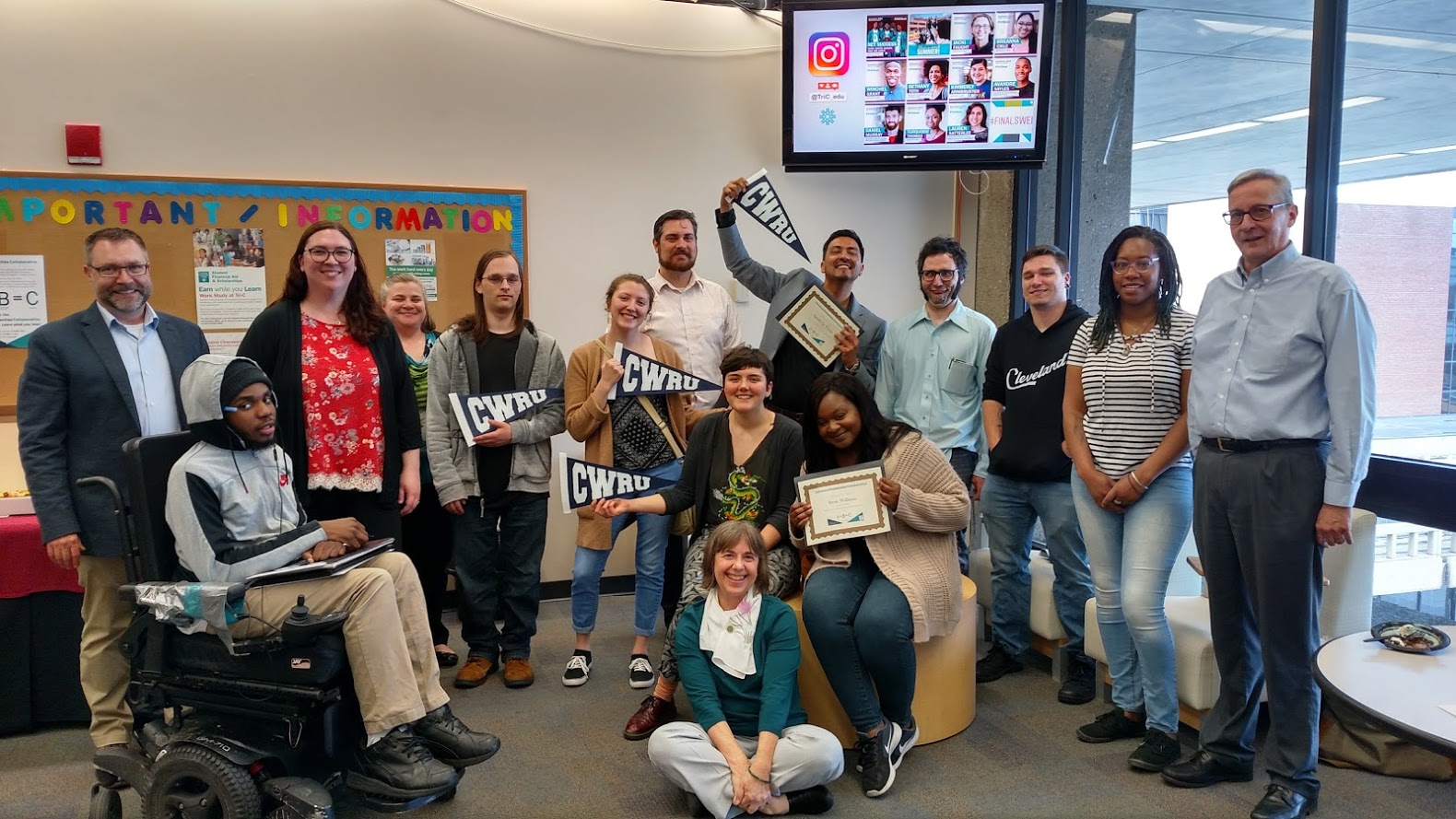
Cleveland Humanities Collaborative Celebrating Graduating Students with faculty & staff 

I work at Cuyahoga Community College teaching History, Women’s Studies and advising in a Transfer Pathway to Case Western Reserve University.  You may have heard of us in the previous 8 years when President and Mrs. Obama often used our college as a model for promoting community college education.

Having earned my Ph.D. in a very …very traditional program, I have great classic research skills and felt myself falling behind the Digital World.  I wanted to understand the “Digital” behind Digital Humanities and I wanted to add new dynamics to the teaching in my on-line classes.  Also I was struggling with a long-running research project.  I needed new tools to organize, diagram and (I now realize) ‘crowdsource’ the aspects of this work.  I was crowd-sourcing before it had a fancy name, but classic methods have been insufficient for what we have been trying to accomplish.

The Digital Humanities Certificate Program is helping me in many ways, broadening my awareness of the scholarship & literature of this field, creating deadlines and forcing me to develop technological skills and independence.  I have ventured into the new fields of mapping and blogging and tried utilizing new content management systems.  I had hoped to gain more technological proficiency which is my weakness.  Since this is a distance learning course and there are no nearby facilities to act as resources, that has been a challenge.

Considering the constantly changing dynamics, platforms and resources of Digital History, I am intrigued by the concept of ‘teaching’ it.  I have used digital tools in my courses, and as noted above, I have greatly expanded my understanding of the field.  My goal for this course is to consider how to balance theory and practice in the learning environment, where ‘expertise’ is one of the variables.  My fellow history professor David Bernatowicz (standing next to the window in the picture above) teaches a “History of Cleveland” course.  This course combines traditional class lecture and activities with actual physical tours.


 I have organized and taught the Cleveland  Women’s History class & tour.  A project I would like to envisage is transforming this physical class/tour into a digital/virtual experience.

Every class is a journey transforming the mind!


Phe Fyi Fo Fum… a giant journey!

PHE: Public Humanities Experience

This semester has been a journey in Public Humanities scholarship and engagement.  Juggling the creation of a public engagement web page for a university archive ‘special collection’ while learning about the theory underlying that engagement has been challenging.  Students like to dream high and while studying are exposed to the best practices, which builds high hopes and expectations.  We explored exciting Digital Public Websites such as “Bracero History Archive” (2010); The Great Chicago Fire and the Web of Memory (1999)and Driving Through Time: The Digital Blue Ridge Parkway.  Learning has been directed toward thinking about the unique aspects of humanities interaction as well as the structural & interpretive components of web presence and websites.

The goal of my particular journey has been to develop a web resource that will provide awareness of resources, connections between resources, encourage scholarship and research and promote on going work on Women and their history in Northeast Ohio.  The real ‘engagement’ aspects of my experience forced me into the application of political, strategic politics as well as challenges of hardware and software, all while being confronted with insights of experts who exposed fallacies in practices and promoted a deeper awareness of audience needs and the connections between tools and conveyance of information.  Each aspect of the education, challenged my conception of the project.  The struggle with deadlines certainly simulated real life production pressure.  Meeting with collaborating individuals and institutions resulted in constant refinement and the dynamic challenge of conflicting goals and interpretations.

Ideas are made real by experiences and when they take place in the public setting they create true human engagement.

FYI: For Your Information

The purpose of digital humanities is to engage people in the ideas, purposes and actions of the world about them.  This does not sound so difficult until it is realized that communicating big and complex ideas to individuals who vary in age, culture, intellectual experience and ability is also being mediated by space, context and technology.  “Interaction (between presenter & receiver) is almost always necessary to accomplish your goals.”  Perspectives and cultures not only of people, but of the ‘organizations of collection’ themselves, among the objectives of the public education, and the audience which varies in capability & experience are all approaching this communication very differently.  It is only through building relationships, that clear and engaging communication can be developed.[1]  It is not merely thinking about the idea we wish to communicate, it is about rethinking about what the visitor is able to receive.  The idea of thinking about “visitors” to public museums, institutions and parks in terms of ‘relationships’ results in a radically different engagement.[2]  When “visiting” was solely defined by physical space, often difficult and expensive to access the “engagement” was much different than when access  to technology demands multi-sensory and multi-platform intersection.  Even though it still may be difficult and expensive to create, it is necessary for the audience to perceive the information we are trying to exchange.

If we want the audience to understand appreciate and act upon or incorporate our information; we must understand and intersect with their modes of communication.

FO: Field Operations

While Citizen Archivist,  The Postville Project and Digital Harlem have provided ideal types for my own ideas, it is not until I got into trying to create a project, that the complexity, collaboration and comprehensive strategy of these undertakings became evident.  These websites are masters of design and integration.  The elements of my project seemed fairly simple:

  • create a list of resource links to make resources accessible in a centralized portal
  • install an exhibit space where women’s history can be demonstrated
  • provide a contact sheet so that information can be exchanged and
  • enable a dynamic space where interesting projects can be announced and engage contribution

Immediately I was challenged by the concept of ‘is my concept of sharing information’ really sharing?[3]  Or am I maintaining control over the sharing, which is not really sharing.  Is there a deeper way to engage?  Am I providing a “newsletter” or a collaborative space?  Am I providing a design that invites the user into the topic and enables them to develop their own thinking as well as absorbing mine?[4]

Considering the audience as a specific individual, is an exercise forced me, as the creator of the site, to move from general concepts and overblown expectations as to who would really access this site.  It also made clear that engaging the content from different perspectives, helps define and present that content in more accessible ways.[5]  I experienced these different perspectives in meetings where interested potential users asked me questions I couldn’t answer.  So much for being an authority on the topic.  But even more humbling was translating my vision into technical reality.  Tools have always been limited.  They are extensions and helpers, but they are not the same thing as a concept.  The vision must be altered by what is possible to accomplish with the tool.  If the tool is insufficient it must be altered or exchanged for a different tool.  I tried to force a dynamic collaborative website concept into a tool that was meant for identifying and collecting things.  If I had technologic expertise or a collaborative team, I might have been able to adapt the tool.  However, I am also working with an established system and there was an unwillingness to adapt their system to my vision.  Back to the drawing board for reconception of how to convey my meaning within and established format.  It was necessary to share control, concept and expression.[6]

FUM: Formative Understandings & Musings

I had envisioned myself as an open and forward thinker.  My journey into digital humanities has challenged that self-conception.  I realize how my training in critical thinking has created its own set of biases and obstacles to communication.  Considering users as specific people with needs has shaped my thinking in terms of content selection. It also demands a broadening my use of tools, to facilitate my communication, rather than expecting others to put forth the effort to grasp my meaning.  Using technology has made me more aware of the multiple layers of interfaces and how that may limit our expressions and reshape our interpretations by focusing our content in “easily accessible tools or images”.  It has deepened my appreciation of the past and the present.  It has sharpened my awareness of the need to communicate ideas more frequently and engagingly.  It has indeed been a giant journey!

[1] Allen-Greil, D., et al. “Social Media and Organizational Change.” In J. Trant and D. Bearman (eds.) Museums and the Web 2011: Proceedings.Toronto: Archives & Museum Informatics. Published March 31, 2011. And Corbett, Katharine T. and Howard S. (Dick) Miller. “A Shared Inquiry into Shared Inquiry.” The Public Historian 28.1 (2006): 15-38.

[2] Lindsay, Anne. “#VirtualTourist: Embracing Our Audience through Public History Web Experience.” The Public Historian 35.1 (February 2013): 67-86.

[3] Michael Frisch, “From A Shared Authority to the Digital Kitchen, and Back,” in Letting Go?: Sharing Historical Authority in a User-Generated World. Edited by Bill Adair, Benjamin Filene, and Laura Koloski (Philadelphia: The Pew Center for Arts and Heritage, 2011) 126-137.

[4]Tim Sherratt, “It’s All About the Stuff: Collections, Interfaces, Power, and People,” Journal of Digital Humanities 1, no. 1 (March 9, 2012), http://journalofdigitalhumanities.org/1-1/its-all-about-the-stuff-by-tim-sherratt/

[5] Tim Sherratt, “It’s All About the Stuff: Collections, Interfaces, Power, and People,” Journal of Digital Humanities 1, no. 1 (March 9, 2012) and Steve Lubar, “Exhibit and Exhibit Labels Workshop, On Public Humanities, March 31, 2015.

[6] Tammy S. Gordon, “Community Exhibition: History, Identity, and Dialogue,” Private History in Public: Exhibition and the Settings of Everyday Life (Lanham: AltaMira Press, 2010). 33-57 plus notes.
Prog Blog

“As it has for more than two centuries, progress will come in fits and starts.  It’s not always a straight line.  It’s not always a smooth path.”                                                                                                   Barak Obama

First it was Tech Week.  On the Tech side…I am getting more comfortable with the concept of trial and error.  Then it was Ad Week, as in administration.  In both cases, it has been about stopping and revisiting the plan.  It is about checking in with the partners.  To recap, this web page project is serving multiple purposes and involves a minimum of 4 partners.  Discussions on the tech side, are leading me to re-consider, either the theme or the look of the landing page.  I already have a minimum of elements in place.  I am looking to gain a better sense of the full set of resources we will be adding.

Then I caught up with my collaborating partners.  This involved following up with personnel who are in charge of items for the page.  I also moved forward in discussions involving the institutional issues of the page: such as locus of content and who is controlling which aspects of the content, whose permissions are required for additional links, who will be involved in creating, revising and maintain specific areas of content, etc.  This involved several exchanges of emails, calls and preparation of another proposal which included identifying and getting agreement on the following:

  1. A paragraph or two outlining the purpose of the page and other relevant information to help visitors understand what to expect and give them some background.
  2. A couple of suggested images to illustrate the page and explain its theme.
  3. A list of relevant institutional resources
  4. A list of relevant external resources

Directions have been re-established.  Items have moved forward in the approval process, issues are being clarified.  Project management is about keeping things moving, navigating expectations and continuing to visualize the goal.  We are moving toward the goal!

Oral History?

All I can say is WHOA………………

My introduction to the “modern age” of oral history really came when I was trying to help a student with a project and stumbled across the Bracero History Archive.  This archive is not just an oral interview collection, but a living history repository and crowd sourcing project, rich with related materials (videos, still images, documents, interpretations, maps, etc.) that provide an in-depth ‘experience’ of the  ‘guest laborer’ program that lasted from 1942-1964.

The Bracero History Archive sets a standard, but history (seemingly in any form) reflects the perspective and needs of the person or group creating it.  History is the queen of the humanities because it adapts and changes reflecting the human spirit and human endeavor.  There is nothing as powerful as the human voice expressing deeply felt and connected human experience.  Technological tools are increasingly making this aspect of humanity publicly accessible.  Specific tools, such as the Oral History Metadata Synchronizer; by indexing, providing the metadata for citation and presenting the interviews in forms that can be easily utilized by researchers makes a huge leap in terms of expanding human dialogue and connection.

The impact of the technological innovations on oral history are extended beyond the production aspects.  Because production and transcription s easier and better; more people can be interviewed.  Now the crowd is increasingly speaking for itself in sites like Story Corps.   This has created an astounding opportunity for “the common voice” to be gathered.  The voice of the crowd prior to this period, was delivered primarily through the voices (and mediation) of reporters.  Oral history is providing a new way to capture history.  In sites such as the Nevada Test site, Baltimore Rising and the Hurricane Digital Memory Bank the crowd is invited to tell its own story.   Stories and perspective are more varied.  A clearer picture of work places the dangers, the pressures, as well as the parade of “American industry” emerges.  Sites like American Folklife   

capture of the sources of endurance and community like music, poetry, crafts, mementos that might differ from those in categorized as “Great Art”.   This explosion of voices  is fracturing the ideal of a single “American Way”, which really never existed.  A fuller awareness of the complexities of the ‘real America’ is causing division and fear, similar to growing pains.

Technology is demanding more from us.  It is forcing us to examine issues differently.  In my project and others, there is a need to reflect on the voices that have been included and how we present them.  New sources always lead to new interpretations. …

This is exciting stuff!!

Oral Tech!

Oral History Metadata Synchronizer    http://www.oralhistoryonline.org/

“The Louie B. Nunn Center for Oral History at the University of Kentucky Libraries OHMS provides users word-level search capability and a time-correlated transcript or indexed interview connecting the textual search term to the corresponding moment in the recorded interview online.

  • OHMS Application: The OHMS application is where the work is done. This is the back-end, web-based application where interviews are imported, and metadata is created.  In the OHMS application transcripts are time-coded and/or interviews are indexed.  Upon completion, the interview record (including the synchronized transcript and/or time-coded index) are exported as an XML file.  When located on a web server, the OHMS XML file is what interfaces with your content management system through the OHMS Viewer.
  • OHMS Viewer: The OHMS viewer is the user interface of ohms. When an interview is called by the repository, the OHMS viewer loads, calling select interview level metadata and the intra interview level metadata created in the OHMS Application from the corresponding xml file.”

Examples  http://www.oralhistoryonline.org/examples/

Does this look like a commercial?  I apologize.  Although I am not currently working with Oral History, I have conducted and tried to utilize oral history in the deep dark past before the interviews were videotaped and indexed.  It was painstaking and the quality variable.  Like many others, I turned to easier sources for my work. This cool new tool is a game changer because it makes Oral History Accessible!  Examining the Resource & guides  indicates that the production is by no means a magic wand.  But the structure eases the transcription process and the data tools make all the production worthwhile, because at the end of it, more people will be able to access the content.  I immediately sent the link to all my friends doing Oral History, who probably already knew about it, because they DO oral history.

History, Women & Health Care in Cleveland and Digital Public Humanities

css.php